Can You Call On A Plane?
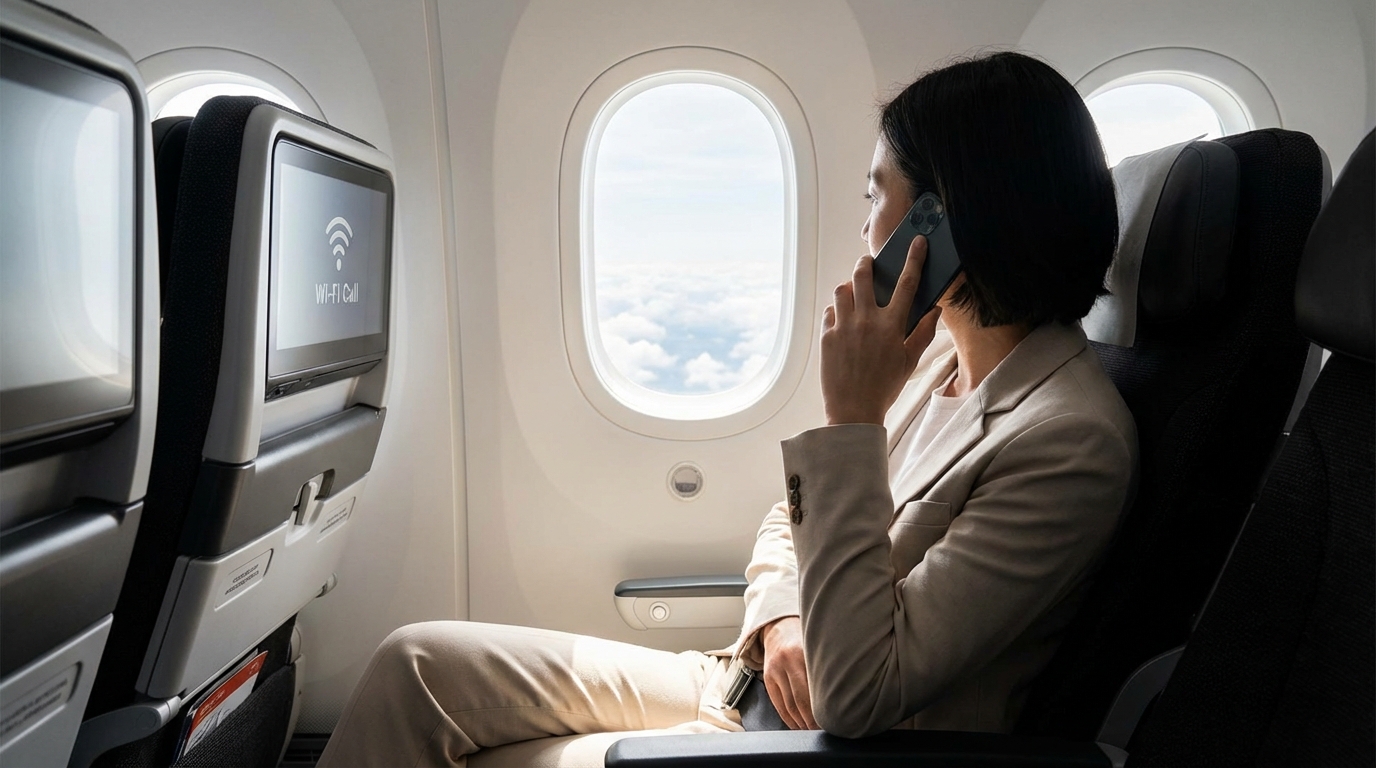
Quick Answer
No, you can't make regular cell phone calls on a plane in the United States. The FCC bans it. But texting, WiFi messaging, and some forms of internet-based communication are allowed on most flights.
No, You Can't Make Cell Phone Calls on a Plane
Making a regular cell phone call on a plane is illegal in the United States. The FCC (Federal Communications Commission) bans the use of cellular voice service while airborne under 47 CFR 22.925. This isn't just an airline policy — it's federal law.
The rule has been in place for decades, and despite occasional proposals to change it, the ban remains firmly in effect. So if you were hoping to catch up on calls during your flight, you'll need to find another way.
Why Are Phone Calls Banned on Planes?
There are two separate reasons, from two different federal agencies:
The FCC's Concern: Network Interference
When your phone is high up in the air, it can connect to multiple cell towers simultaneously instead of just one on the ground. This creates interference and disrupts the cellular network for people below. The FCC banned airborne cell phone use to protect the network infrastructure.
The FAA's Concern: Aircraft Systems
The FAA (Federal Aviation Administration) has historically worried about electromagnetic interference from personal electronic devices affecting aircraft navigation and communication systems. Modern aircraft are much better shielded than older planes, which is why the FAA relaxed rules on using devices in airplane mode back in 2013. But active cellular transmissions during flight remain prohibited.
What About WiFi Calling?
This is where it gets nuanced. The FCC's ban specifically covers cellular frequencies — not WiFi-based voice calls. Technically, making a voice call over WiFi (through apps like FaceTime Audio, WhatsApp, or Skype) isn't illegal under the FCC rule.
However, most U.S. airlines explicitly prohibit voice and video calls of any kind — cellular or WiFi — in their policies. It's a passenger experience decision. Nobody wants to sit next to someone having a loud phone conversation for three hours at 35,000 feet.
So while a WiFi call isn't technically against federal law, it violates virtually every U.S. airline's rules. Flight attendants will ask you to stop, and you could face consequences for not complying with crew instructions.
What You CAN Do on a Plane
You've got plenty of communication options that are both legal and allowed by airlines:
Text Messaging Over WiFi
Most major U.S. airlines offer free WiFi-based messaging. You can send texts through iMessage, WhatsApp, Facebook Messenger, Telegram, Signal, and similar apps. Delta, United, Southwest, JetBlue, and Alaska all support free messaging on most flights.
Email works on any flight with WiFi. Whether you buy a full WiFi package or use the free messaging tier, email typically goes through. It's a perfectly reasonable way to handle anything that might otherwise require a phone call.
Sending Voice Notes
You can record and send voice messages through WhatsApp or iMessage over WiFi. Just be mindful of the people around you — use a quiet voice or cup your hand around the mic. Nobody wants to hear your messages.
Video Messaging (Not Video Calls)
Some passengers use Marco Polo or similar apps to send short video messages. These aren't live calls, so they don't disrupt the cabin the way a conversation would. But bandwidth can be an issue.
What About International Flights?
Rules vary by country, and some international carriers take a different approach:
- European airlines: Some European carriers like Emirates and certain EU airlines have installed picocells (small cellular base stations) on aircraft, allowing actual cell phone calls at altitude. The EU approved in-flight cellular service, and some airlines offer it — though it's expensive (often $2-$5 per minute).
- Middle Eastern carriers: Emirates has offered in-flight cell phone calling for years on select aircraft.
- Asian carriers: Policies vary. Some offer cellular service, others don't.
If you're flying internationally on a non-U.S. airline, check that specific carrier's policy. The rules are different outside American airspace.
The T-Mobile and Delta Free WiFi Situation
T-Mobile sponsors free in-flight WiFi on Delta, Alaska, Hawaiian, and Southwest airlines. Depending on your T-Mobile plan, you may get full internet access or just messaging. But even with full internet, voice and video calls are still against airline policy.
The free WiFi is great for texting, email, and browsing — just don't try to use it for phone calls.
What Happens If You Try to Make a Call?
If you try to make a regular cell phone call, it simply won't work. Your phone is in airplane mode (or should be), which disables the cellular radio. No cellular radio, no cell call.
If you attempt a WiFi-based voice call, a few things might happen:
- The airline's WiFi may block it. Many airlines filter their WiFi to prevent voice and video calling apps from working.
- A flight attendant will ask you to stop. Crew members enforce the no-calls policy, and they take it seriously.
- You'll annoy everyone around you. Even if it somehow works, making a call in a quiet cabin with 150 people who can't escape your conversation is a guaranteed way to become the most hated person on the plane.
Will Phone Calls Ever Be Allowed on U.S. Flights?
The FCC proposed lifting the cellular ban in 2013, but the idea was enormously unpopular. Surveys consistently show that the vast majority of passengers — and flight attendants — don't want voice calls allowed on planes. The Department of Transportation even considered a separate rule to ban in-flight calls even if the FCC allowed them.
The proposal was ultimately shelved, and there's no active effort to bring it back. For the foreseeable future, U.S. flights will remain phone-call-free zones.
Honestly? Most frequent travelers consider this a feature, not a bug.
What About Emergency Calls?
If there's an actual emergency on a plane, you don't need your cell phone. Flight crews have direct communication with the ground through the aircraft's radio system. They can contact air traffic control, airline operations, and even medical professionals on the ground instantly.
The cockpit has satellite communication (SATCOM) and VHF radio that works anywhere in the world. If you have a personal emergency — say you receive devastating news via text while connected to WiFi — tell a flight attendant. They can relay information to the ground and, in some cases, arrange for the captain to make a radio call on your behalf.
AirFone-style satellite phones used to exist on planes but have been largely discontinued. Some business and first-class cabins on international carriers still offer satellite phone handsets, but they're rare and expensive.
The Etiquette Factor
Even setting aside the legal and policy issues, there's a strong etiquette argument against phone calls on planes. You're sitting inches from strangers in a sealed tube where nobody can leave. The cabin is relatively quiet. A one-sided phone conversation is uniquely annoying because your brain instinctively tries to fill in the missing half of the conversation — it's a documented psychological phenomenon.
Flight attendant unions have consistently lobbied against allowing calls precisely because they know it would create constant passenger conflicts. In surveys, over 75% of passengers say they'd oppose allowing voice calls on flights. The current no-calls norm is one of the few things virtually everyone agrees on in air travel.
Tips for Staying Connected Without Calling
Here's how to handle communication during a flight without making a single call:
- Send a "boarding now" text before you switch to airplane mode so people know you'll be unreachable by phone
- Set up auto-reply on your email or messaging apps to let people know you're in the air
- Use WiFi messaging for anything urgent — it's free on most airlines and works in real time
- Pre-arrange check-in times if someone needs to reach you during a long flight. "I'll message you when I land" solves most problems
- Handle critical calls before boarding. That 30-minute window at the gate is your last chance for voice calls until you land
The Bottom Line
Cell phone calls are banned on U.S. flights by the FCC, and WiFi-based voice calls are banned by virtually every U.S. airline's policy. But free texting over WiFi is available on most major carriers, email works on any flight with WiFi, and you can send voice messages through apps like WhatsApp. You won't be cut off from the world — you just can't talk on the phone.
Frequently Asked Questions
Is it illegal to make a phone call on a plane?
Yes, in the United States. The FCC prohibits cellular voice calls while airborne under federal regulation 47 CFR 22.925. This applies to all commercial flights in U.S. airspace. WiFi-based calls aren't technically illegal under the FCC rule, but they're banned by virtually every U.S. airline's policies.
Can I use FaceTime or WhatsApp calling on a plane?
Technically these WiFi-based calls aren't covered by the FCC ban, but almost every U.S. airline prohibits voice and video calls over their WiFi network. Many airlines actively block calling features. Even if it works, flight attendants will ask you to stop.
Can I text on a plane?
Yes. Most major U.S. airlines offer free WiFi-based messaging. You can send texts through iMessage, WhatsApp, Facebook Messenger, and similar apps. Regular SMS texts (green bubbles on iPhone) won't work because they require a cellular connection, but internet-based messaging works great.
Do any airlines allow phone calls?
Some international carriers do. Emirates and certain European airlines have installed cellular base stations on aircraft that allow actual phone calls, though they're expensive ($2-$5 per minute). No U.S. airline currently allows voice calls of any kind during flight.
Why are phone calls banned on planes?
Two reasons: the FCC bans airborne cellular use because phones at altitude can interfere with multiple cell towers simultaneously, disrupting the ground network. Additionally, airlines ban all voice calls (including WiFi calls) because passengers overwhelmingly don't want to hear other people's phone conversations in a confined cabin.
Written by Aviation Experts
Aviation Professionals
With decades of combined experience in the aviation industry, our team shares insider knowledge to make your travel experience smoother and less stressful.
Was this article helpful?