Can You Bring a Knife on a Plane?
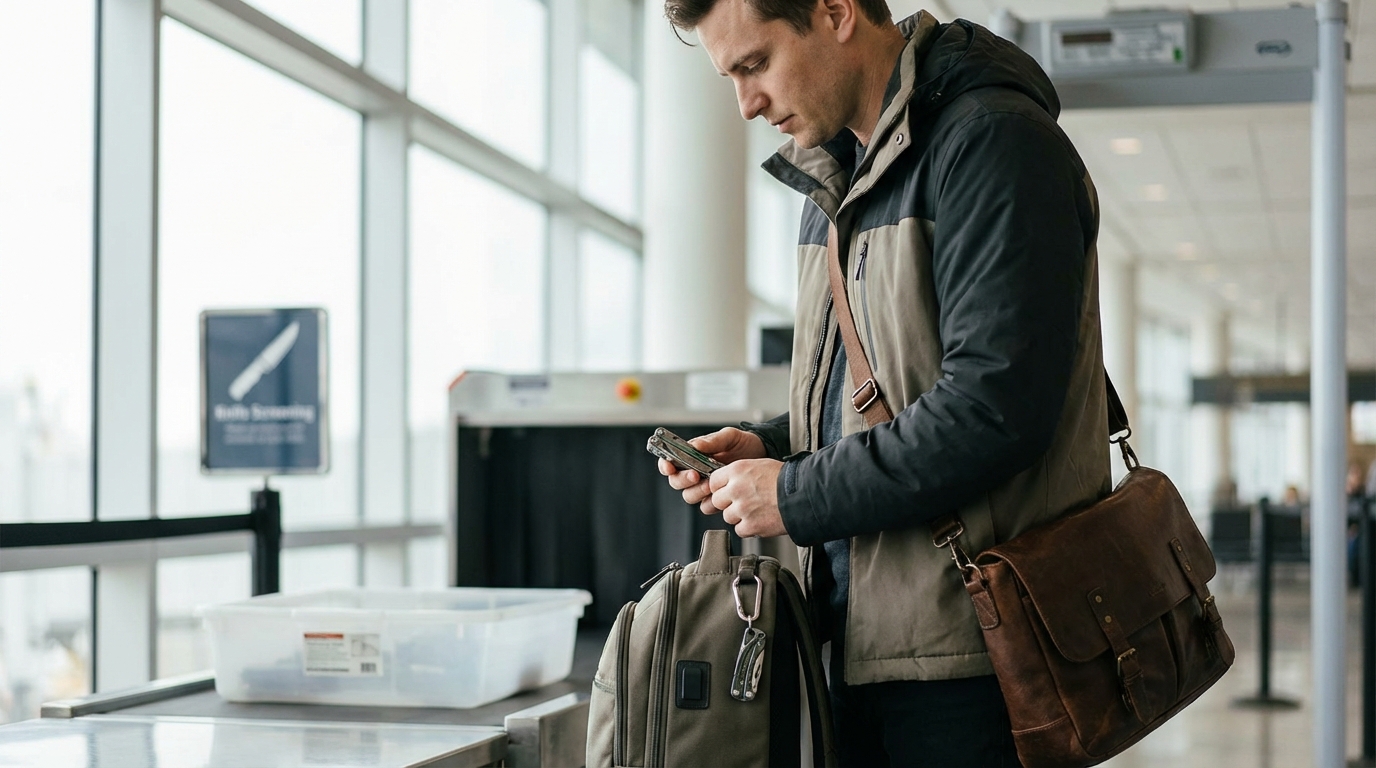
Quick Answer
No, you cannot bring a knife in your carry-on bag. All knives (except plastic or round-bladed butter knives) are prohibited from the cabin. You can pack knives in checked luggage if they're properly sheathed.
No. You cannot bring a knife on a plane in your carry-on bag. This is one of the TSA's clearest and most strictly enforced rules. All knives -- regardless of blade length, type, or material -- are prohibited in carry-on luggage. The only exceptions are plastic knives and round-bladed butter knives.
The Rule Is Simple
Knives are banned from carry-on bags. Period. It doesn't matter if it's a tiny Swiss Army knife with a 1-inch blade, a box cutter, a multi-tool with a knife attachment, or a chef's knife. If it has a sharp blade, it can't go in your carry-on.
This includes:
- Pocket knives (any size)
- Swiss Army knives
- Multi-tools with blades
- Utility knives and box cutters
- Hunting knives
- Kitchen knives
- Craft knives (X-Acto, etc.)
- Ceramic knives
- Letter openers with a blade
- Razor blades (loose or utility-style)
- Switchblades and butterfly knives
- Sword canes and hidden blade devices
There's no gray area here. If it's designed to cut and has an exposed blade, it's not getting through TSA in your carry-on.
What About the 2013 Proposal?
You might have heard that the TSA was going to allow small pocket knives on planes. In 2013, the TSA proposed a rule change that would have permitted knives with blades under 2.36 inches (6 cm) that didn't lock or have a molded grip. That proposal was withdrawn after massive pushback from flight attendant unions, airlines, and law enforcement groups.
The ban on all knives in carry-on bags remains firmly in place. So if someone tells you that small pocket knives are now allowed, they're wrong. The 2013 proposal never took effect and the TSA has shown no interest in revisiting it.
Knives in Checked Bags
Here's the good news for knife owners: you can pack knives in your checked luggage. There's no restriction on the type or size of knife you can put in a checked bag.
However, the TSA has specific packing requirements:
- Sheath or wrap all blades. Every knife must be sheathed, wrapped in thick cloth, or placed in a hard case. This protects baggage handlers and TSA inspectors who may open your bag.
- Secure the sheath. Use tape or a rubber band to make sure the sheath doesn't slip off during transit. Sheaths can shift around during baggage handling.
- Consider a hard-sided knife case. If you're traveling with expensive knives, a dedicated knife roll or hard case prevents damage to the blades and keeps everything organized.
- Don't put knives in outside pockets. Pack them in the main compartment of your suitcase, ideally in the center surrounded by clothing for padding.
There's no limit on the number of knives you can pack in checked luggage, as long as they're all properly secured. Hunters, chefs, and knife collectors regularly fly with entire collections in checked bags without issues.
Special Cases: Chefs and Professionals
If you're a professional chef or culinary student traveling with a knife kit, checked luggage is your only option for domestic flights. Here's how to do it right:
- Use a padded knife roll or bag. Professional knife rolls keep blades separated and protected. Many have individual slots that prevent blades from touching.
- Pack the knife roll inside your suitcase. Don't check a knife roll by itself -- it should be inside a larger bag with other items providing cushion.
- Consider shipping instead. If you're traveling with an expensive set of Japanese knives, shipping them via FedEx or UPS with insurance might give you better peace of mind than trusting them to baggage handlers.
- Declare valuable items. If your knife kit is worth significant money, consider getting a TSA-approved lock and noting the value on your luggage tag.
What's Actually Allowed in Carry-On
While knives are out, you might be surprised by what sharp-ish items the TSA does allow in carry-on:
- Scissors with blades under 4 inches from the pivot point
- Nail clippers and nail files
- Disposable razors (the blade is enclosed in a cartridge)
- Knitting needles and crochet hooks
- Tweezers
- Screwdrivers under 7 inches
- Plastic knives
- Butter knives with rounded blades (no serration, no point)
- Multi-tools without blades
- Safety razors (without the blade -- the razor blade itself must go in checked)
The pattern here is that items need to be either too small or dull to use as a weapon, or their sharp parts need to be safely enclosed. A disposable Gillette razor is fine because the blade is locked inside a cartridge. A straight razor is not fine because the blade is fully exposed.
What Happens If You Forget a Knife in Your Carry-On?
It happens more often than you'd think. The TSA reports confiscating thousands of knives every week at airport checkpoints across the country. It's actually one of the most commonly confiscated items. Here's what to expect:
- The X-ray will catch it. Knives show up clearly on the screening equipment. Metal blades are obvious, and even ceramic knives are detectable.
- TSA will pull your bag. An officer will open your bag and remove the knife.
- You'll have options: Surrender the knife (it goes in a bin and won't be returned), go back to the check-in counter to put it in a checked bag, give it to someone who isn't flying, or mail it to yourself if the airport has a postal service.
- You won't be arrested for an honest mistake. The TSA understands that people forget things in their bags. You'll lose the knife, not your freedom.
That said, don't make a habit of it. Repeated incidents could flag you for additional screening on future trips. And deliberately attempting to conceal a knife is a different story entirely -- that's a federal offense.
Pocket Knives and Everyday Carry
If you carry a pocket knife daily, air travel requires some adjustment. The most common TSA confiscation item is the forgotten pocket knife clipped inside a bag or pants pocket. Everyday carriers lose their knives at airports at an almost comically high rate.
Tips for everyday carriers:
- Leave your good knife at home. If you can't bear to lose it, don't bring it to the airport. That custom titanium folder you spent $300 on has no business going anywhere near a TSA checkpoint.
- Buy a cheap replacement at your destination if you need one. Hardware stores, outdoor shops, and even some convenience stores sell basic pocket knives.
- Set a phone reminder the night before your flight to remove your knife from your pocket or bag.
- Check your bags thoroughly. Pocket knives have a way of ending up in bag pockets you forgot about. Check every compartment before heading to the airport.
- Use the TSA's "What Can I Bring?" tool at tsa.gov if you're unsure about a specific item.
- Consider a TSA-friendly alternative. If you want something knife-like for your trip, bladeless multi-tools or credit card-sized tools without blades can fill some of the gap.
Multi-Tools: It Depends
Multi-tools are a gray area. The rule is simple: if the multi-tool has a knife blade, it's prohibited in carry-on. If it only has screwdrivers, pliers, and other bladeless tools, it's allowed.
In practice, most popular multi-tools (Leatherman, Gerber, Victorinox) include a knife blade and are therefore banned from carry-on. Even if the blade is tiny and the rest of the tool is perfectly fine, that one blade makes the whole thing prohibited.
A few brands make TSA-compliant multi-tools without blades -- specifically designed for travelers. Leatherman's Style PS is a popular option. It has pliers, a file, a carabiner, tweezers, and scissors (under 4 inches), but no knife blade. It sails through TSA every time.
If you carry a multi-tool with a blade regularly, consider buying a bladeless travel version for your flights and keeping your main multi-tool in checked luggage.
International Knife Rules
Most countries are even stricter than the U.S. when it comes to knives:
- European Union -- Knives of any size are prohibited in carry-on
- United Kingdom -- All knives banned from cabin luggage
- Canada -- Knives with blades over 6 cm are prohibited in carry-on (this means some very small knives might technically be allowed, but enforcement varies)
- Australia -- All knives and sharp instruments banned from carry-on
- Japan -- Blades over 6 cm banned from carry-on; smaller blades at officer discretion
For checked bags, most countries follow similar rules to the U.S.: allowed as long as they're properly sheathed. But some destinations have strict import laws on certain knife types (switchblades, butterfly knives, gravity knives, etc.), so check local laws if you're packing something unusual. Arriving in a country with a prohibited knife type could result in confiscation or legal trouble, even if it was perfectly fine in your checked bag on the U.S. side.
The Bottom Line
Don't bring a knife in your carry-on. There's no exception for small blades, expensive blades, or "it's just a tool" arguments. Pack it in your checked bag, sheath it properly, and move on. It's one of the easiest TSA rules to follow -- and one of the easiest to accidentally break if you carry a knife daily. Set that phone reminder, check your pockets, and save yourself the heartbreak of watching your favorite blade disappear into a TSA bin.
Frequently Asked Questions
Can I bring a Swiss Army knife on a plane?
Not in your carry-on. Swiss Army knives have blades, which makes them prohibited in cabin luggage. You can pack them in your checked bag as long as the blades are folded closed.
What size knife is allowed on a plane?
No knife of any size is allowed in carry-on luggage. The only exceptions are plastic knives and round-bladed butter knives. All other knives must go in checked bags.
Can I bring a multi-tool on a plane?
Only if it doesn't have a knife blade. Multi-tools with blades are banned from carry-on. Bladeless multi-tools (like the Leatherman Style PS) are allowed through security.
What happens if I accidentally bring a knife to the airport?
TSA will find it during X-ray screening and give you options: surrender the knife, go back to check it in luggage, give it to a non-traveling companion, or mail it to yourself. You won't be arrested for an honest mistake.
Can I put a knife in my checked bag?
Yes. You can pack knives of any type and size in checked luggage. The TSA requires that all blades be sheathed or securely wrapped to protect baggage handlers.
Written by Aviation Experts
Aviation Professionals
With decades of combined experience in the aviation industry, our team shares insider knowledge to make your travel experience smoother and less stressful.
Was this article helpful?