Can You Bring a Cigar Cutter on a Plane?
Quick Answer
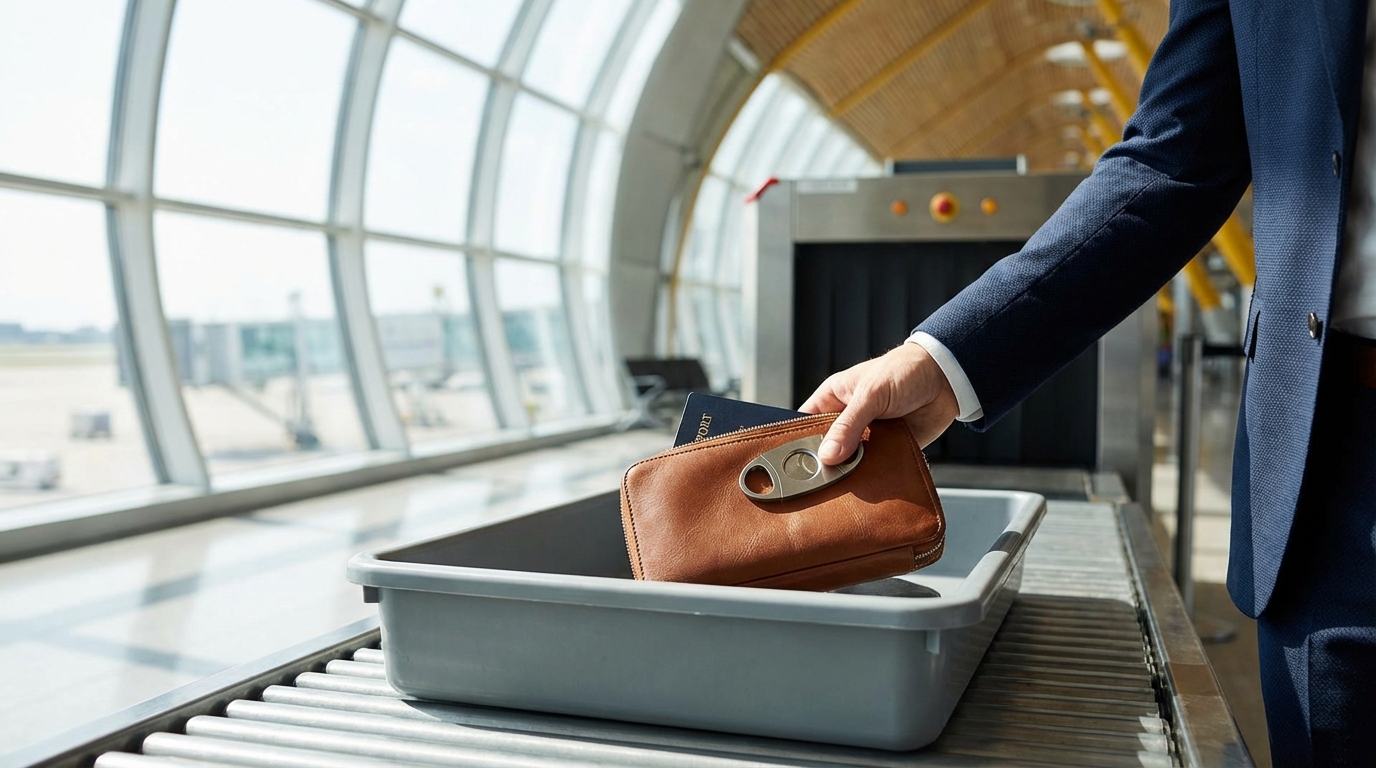
Yes, you can bring most cigar cutters on a plane. The TSA allows cigar cutters in both carry-on and checked bags, though they recommend packing them in checked luggage. Punch cutters and V-cutters are your safest bets for carry-on.
Yes, you can bring a cigar cutter on a plane. The TSA permits cigar cutters in both carry-on and checked bags, though they officially recommend putting them in your checked luggage. That said, not all cutters are treated equally at the checkpoint, and the type you carry matters.
TSA Rules for Cigar Cutters
The TSA's official stance is straightforward: cigar cutters are allowed. But here's where it gets nuanced. The TSA classifies sharp objects based on blade length and design, and different cutter styles fall into different categories.
The key rule to remember: any blade longer than 4 inches is considered a weapon and will be confiscated. Most cigar cutters have blades well under that limit, but it's worth knowing the threshold.
TSA officers also have final discretion at the checkpoint. Even if an item is technically allowed, an officer can deny it if they believe it poses a security threat. That's the wild card you can't fully plan around, and it's the reason experienced cigar travelers have strong opinions about which cutter to bring.
Which Cigar Cutters Are Safest to Carry On?
Not all cigar cutters carry the same risk at security. Here's a breakdown by type:
Punch Cutters
A punch cutter is your best bet for hassle-free travel. It doesn't have an exposed blade and doesn't fall under the TSA's "sharp objects" category. It's a small, cylindrical tool that pokes a hole in the cap of your cigar. Most TSA agents won't give it a second look. Many punch cutters are built into keychain fobs or look like small pens, so they're about as non-threatening as a cigar accessory gets.
The trade-off is that punch cutters only work on certain ring gauges and give you a tighter draw than a straight cut. But for travel convenience, they're unbeatable.
V-Cutters
V-cutters (also called wedge cutters) are another solid travel option. The blade is recessed inside the body of the cutter, making it less likely to trigger any concerns. These create a V-shaped notch in the cigar cap and are generally compact enough to slip into a pocket or travel case.
Because the blade is enclosed within the housing, V-cutters rarely draw attention at the X-ray machine. They look like a small metal gadget rather than something sharp. Popular brands like Colibri and Xikar make slim V-cutters that are practically designed for travel.
Guillotine Cutters
Single and double guillotine cutters are the most common type, and they're usually fine in carry-on bags. The blades are small, typically well under 4 inches. However, because they have visible exposed blades, they're more likely to draw attention during X-ray screening. If a TSA agent pulls your bag for a closer look, don't panic. Just explain what it is.
Double-blade guillotine cutters tend to show up more clearly on X-ray than single-blade versions, simply because there's more metal. If you're set on traveling with a guillotine cutter, a simple single-blade model draws less scrutiny than a heavy, premium double-blade cutter.
Scissor-Style Cutters
Cigar scissors are allowed as long as the blades are under 4 inches from the pivot point, which they almost always are. The TSA permits scissors with blades shorter than 4 inches in carry-on bags, so scissor-style cigar cutters fall under that rule. These are slightly more likely to get a second look than a punch cutter, but they're still perfectly legal.
The downside of cigar scissors for travel is that they look the most like a weapon on an X-ray. They're clearly scissors, and that's going to get some agents reaching for your bag. You'll likely get through fine, but expect a brief conversation about what they are.
Cigar Cutters in Checked Bags
If you want zero chance of issues at the checkpoint, pack your cigar cutter in your checked bag. There are no restrictions on cigar cutters in checked luggage.
The only thing to keep in mind: the TSA asks that any sharp objects in checked bags be sheathed or securely wrapped. This protects baggage handlers and inspectors from getting cut when they open your bag. Toss your cutter in a hard case or wrap it in a cloth before packing it away. A simple leather pouch or the case your cutter came in works perfectly.
What About Cigar Lighters?
Since you're already thinking about your cigar accessories, here's the lighter situation. You can bring one disposable or Zippo-style lighter in your carry-on or on your person. But torch lighters, the kind most cigar smokers prefer, are banned from both carry-on and checked bags.
That's right. Your beloved jet flame lighter can't fly with you. Soft flame lighters only. If you need a torch lighter at your destination, plan to buy one when you arrive or ship it ahead of time. Many resort areas, golf courses, and cigar lounges sell inexpensive torch lighters, so you won't be stuck using matches.
Cedar spills (thin strips of cedar used to light cigars) and wooden matches are allowed in carry-on bags, so those are backup options worth considering. Just don't bring strike-anywhere matches. Only safety matches, the kind that require a matchbox to light, are permitted.
Traveling with Cigars: Quick Tips
While we're on the subject, here are some practical tips for flying with your cigars and accessories:
- Cigars are fully allowed in both carry-on and checked bags. There's no limit on quantity for domestic flights.
- Use a travel humidor or a sealed plastic bag with a small humidity pack to keep your cigars fresh during the flight. Airplane cabins have extremely low humidity (often below 20%), and unprotected cigars will dry out within hours. A Boveda 69% pack in a sealed ziplock bag is the budget-friendly solution.
- Carry-on is better than checked for cigars. The cargo hold temperature fluctuates and can get very cold, which isn't great for cigar wrapper integrity. If you've got premium sticks, keep them in the cabin with you.
- International flights have customs limits. Returning to the U.S., you can bring up to 100 cigars duty-free (if they're from anywhere except Cuba, which has a limit of $800 total value in your personal exemption).
- Buying cigars abroad? Save your receipts. Customs may ask for proof of purchase if you're bringing in a large quantity. Also be aware that Cuban cigars purchased outside the U.S. are subject to specific regulations that change periodically.
- Don't smoke on the plane. This should be obvious, but it's a federal offense. Save it for the airport smoking lounge or your destination.
Airport Smoking Lounges
If you've got a layover and need to light up, some airports still have designated smoking areas. A few even have full cigar lounges. Airports like Dallas/Fort Worth (DFW), Atlanta (ATL), Las Vegas (LAS), and several international hubs still offer indoor smoking rooms past security. Most U.S. airports, however, require you to exit the secured area to smoke, which means going through security again.
Check your layover airport's amenities before your trip. If smoking is only allowed outside the terminal, factor in the extra time to get back through security.
What to Do If Your Cutter Gets Confiscated
It happens. Even though cigar cutters are technically allowed, TSA officers have discretion, and sometimes they make the call to take it. Here's how to handle it:
- Don't argue. You won't win, and you'll only slow down the line and potentially create a bigger problem for yourself.
- Ask to go back. If you haven't passed through the secure area yet, you can ask to step back and put the cutter in your checked bag or hand it off to someone who isn't flying.
- Mail it home. Some airports have shipping services near the security checkpoint. It'll cost you a few bucks, but it beats losing a nice cutter.
- Travel with an inexpensive cutter. This is the real pro tip. Don't bring your $80 Xikar on a trip. Grab a cheap guillotine cutter that you won't cry over if it gets taken. You can find decent plastic guillotine cutters for under $5.
Real-World Experiences
Cigar forums are full of stories from travelers who've brought cutters through TSA without a hitch. The overwhelming consensus is that punch cutters and V-cutters never get flagged, guillotine cutters occasionally get a second look but almost always pass, and cigar scissors sometimes cause a brief holdup.
The airports where you're most likely to have an issue are smaller regional ones where TSA agents see cigar cutters less frequently and may not recognize them. At major hubs like JFK, LAX, or ORD, the agents have seen thousands of cigar cutters and won't bat an eye.
If you're connecting through a smaller airport, that's the leg where you might want the cutter in your checked bag instead.
The Bottom Line
Cigar cutters are allowed on planes in both carry-on and checked bags. Punch cutters and V-cutters are the safest choices for carry-on because they don't have exposed blades. Guillotine and scissor-style cutters are also fine, but they're slightly more likely to get a second look.
If you want zero risk, pack it in your checked bag. And whatever you do, leave the torch lighter at home.
Frequently Asked Questions
Can I bring a guillotine cigar cutter in my carry-on?
Yes. Guillotine cigar cutters are allowed in carry-on bags. The blades are well under the TSA's 4-inch limit. However, TSA officers have final discretion and could pull it for a closer look.
What type of cigar cutter is least likely to cause problems at TSA?
A punch cutter. It doesn't have an exposed blade and doesn't fall under the TSA's sharp objects category, so it almost never gets flagged at security.
Can I bring a torch lighter for my cigars on a plane?
No. Torch lighters (jet flame lighters) are banned from both carry-on and checked bags. You can only bring a standard disposable lighter or a Zippo-style lighter.
What happens if TSA confiscates my cigar cutter?
You can ask to step back before the secure area and put it in your checked bag, hand it to someone, or mail it home if the airport has a shipping service. Don't argue with the officer. Travel with an inexpensive cutter to avoid losing something valuable.
Written by Aviation Experts
Aviation Professionals
With decades of combined experience in the aviation industry, our team shares insider knowledge to make your travel experience smoother and less stressful.
Was this article helpful?