Can You Bring a Fishing Rod on a Plane?
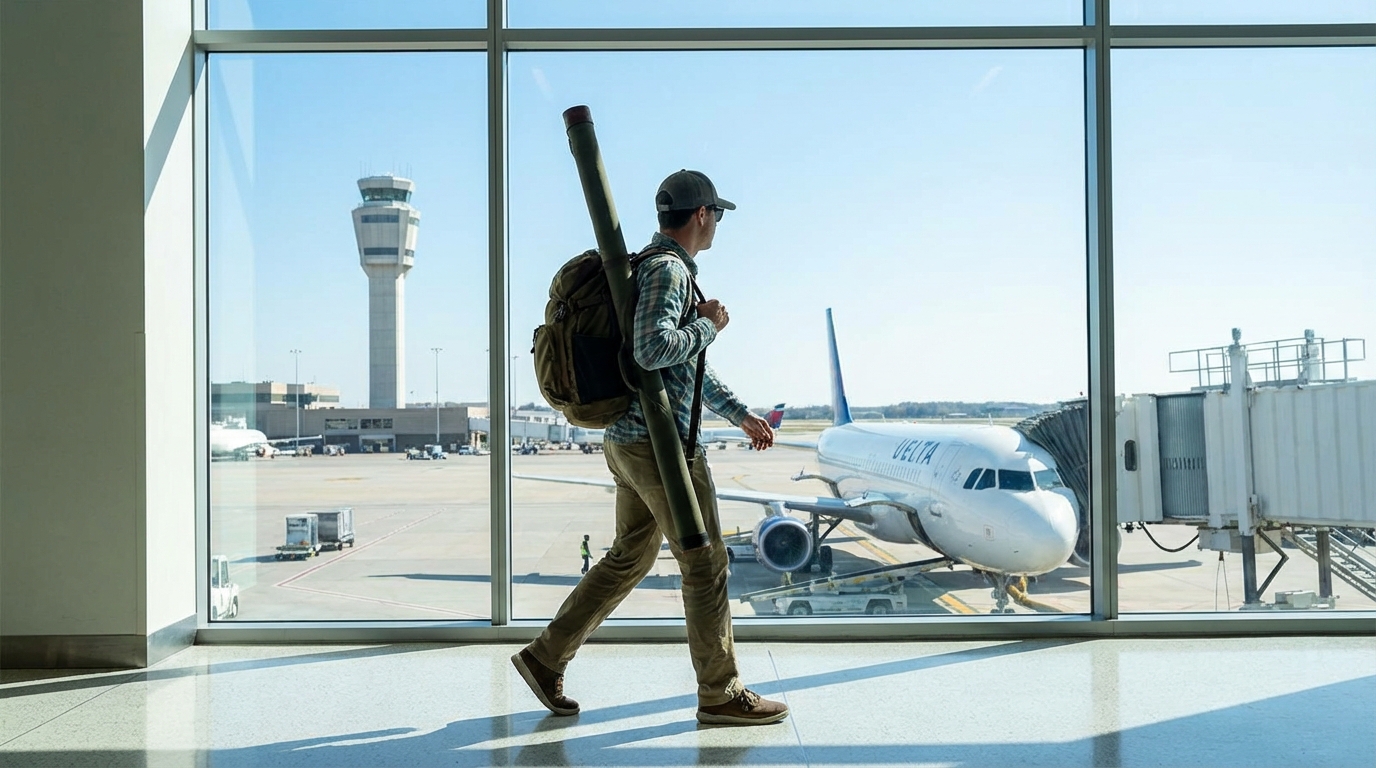
Quick Answer
Yes, you can bring a fishing rod on a plane in both carry-on and checked bags. TSA allows fishing poles through security, though your airline may have size restrictions for carry-on. Sharp hooks and large lures should go in checked luggage.
The Quick Answer
TSA allows fishing rods in both carry-on and checked bags. There's no outright ban on bringing a fishing pole through airport security. The real question is whether your rod fits within your airline's carry-on size limits — and what to do with all the sharp tackle that comes with it.
Here's the breakdown: rods and reels can go either way. Sharp hooks, knives, and large lures need to be checked. Small flies and lures can technically go in carry-on, but it's a gamble at the checkpoint.
TSA Rules for Fishing Equipment
TSA's official stance is clear on the basics, but there's some gray area on tackle. Here's what's allowed where.
Carry-On: Allowed
- Fishing rods and poles
- Fishing reels
- Small fishing lures
- Small fishing hooks (like fly fishing flies)
- Fishing line
- Pliers without cutting edges
Checked Bags Only
- Large fish hooks (deep-sea, treble hooks, etc.)
- Fillet knives and bait knives
- Gaffs
- Spear guns
- Large lures with exposed treble hooks
- Multi-tools with blades
The Gray Area
TSA says small hooks and lures are allowed in carry-on, but the final decision always rests with the individual TSA officer. What one officer considers a "small" hook, another might flag. If you've got a box of flies for trout fishing, you'll probably be fine. A tackle box full of bass crankbaits with treble hooks? That's more likely to get pulled.
The safest move: pack all hooks and lures in checked bags. It eliminates the risk of losing your favorite tackle to the confiscation bin.
Carrying a Fishing Rod On Board
Here's where it gets practical. TSA doesn't restrict fishing rods in carry-on, but airlines have size limits for anything you bring in the cabin.
Multi-Piece Travel Rods
This is the best option for carry-on. A 4-piece fly rod breaks down to about 28-30 inches — easily fits in an overhead bin inside a rod tube. Many spinning and casting rods now come in travel configurations that break down to under 24 inches. If you're a frequent fishing traveler, investing in a quality travel rod pays for itself in convenience.
One-Piece and Two-Piece Rods
A standard 7-foot one-piece rod won't fit in any overhead bin. Even a two-piece rod at 3.5 feet is pushing it on smaller aircraft. You can try — and gate agents might let it slide — but don't count on it. These are better off checked.
Rod Tubes for Carry-On
If you're bringing travel rods as carry-on, a compact rod tube is essential. Several manufacturers make carry-on-friendly tubes:
- Fishpond Jackalope Rod Tube — 29.5 inches, fits up to six 4-piece rods
- Simms GTS Rod and Reel Vault — Separate compartments for rods and reels
- Orvis Carry-It-All — Internal rod pocket with padding
These tubes fit in most overhead bins and protect your rods during the flight. Carry reels separately in your personal item — they're valuable and small enough to keep with you.
Checking Fishing Rods
For longer rods or full gear setups, checking makes the most sense. Here's how to do it right.
Rod Tubes
A hard rod tube is the standard for checked fishing rods. PVC tubes from the hardware store work in a pinch, but purpose-built travel tubes offer better padding and end caps. Expect to pay $40-$120 for a quality tube.
Key tips for packing a rod tube:
- Rubber-band your rods together to prevent them from rattling around inside
- Wrap guides with cloth or bubble wrap — rod guides are the most fragile part
- Put a sock or bubble wrap on the tip — tip breakage is the most common damage
- Fill empty space with soft material to eliminate movement
- Label the tube with your name, phone number, and destination
Reels
Don't check your reels if you can avoid it. Baggage handling can damage precision reel mechanisms. Pack reels in your carry-on, ideally in padded reel cases. If you must check them, wrap them well and put them inside the rod tube or a checked bag — not loose in the tube where they can bang against rod blanks.
Tackle and Accessories
Your tackle box, hooks, lures, knives, and tools should all go in checked luggage. Pack sharp items securely — wrap hooks in cloth, sheathe knife blades, and organize lures so treble hooks can't snag other gear. TSA officers are more likely to let your checked bag through smoothly if sharp items are clearly secured.
Airline Fees for Fishing Equipment
Most airlines treat fishing rods as standard checked baggage. You won't face special "sports equipment" surcharges in most cases.
Delta Air Lines
- Fishing equipment accepted as checked baggage
- Standard checked bag fees apply ($35 first bag domestic)
- 50 lb weight limit
- Rod tubes should be under 115 linear inches
American Airlines
- Fishing rods treated as standard checked items
- Standard bag fees apply
- Oversize fees may apply for tubes longer than 62 linear inches (varies by route)
United Airlines
- Fishing rods accepted as checked baggage
- Standard fees apply
- Recommends protective tube or case
Southwest Airlines
- Two free checked bags — rod tube can substitute for one
- Best deal for anglers flying with gear
- 50 lb weight limit per bag
Alaska Airlines
- Great for Alaska-bound fishing trips
- Standard checked bag fees apply
- Rod tubes accepted as checked items
If your rod tube exceeds the standard checked bag size limit (usually 62 linear inches), some airlines charge an oversize fee of $75-$200. A 7-foot tube is about 84 inches long — that's oversize on most carriers. Shorter travel tubes avoid this entirely.
Fly Fishing Gear: Special Considerations
Fly anglers have it easier than most when it comes to air travel. Four-piece rods break down small, fly boxes are compact, and the whole setup can fit in a carry-on-sized bag.
- Fly boxes: Carry-on friendly. Small flies don't trigger TSA concerns most of the time.
- Fly line: No restrictions. Pack it however you want.
- Waders and boots: Check these. They're bulky and heavy. Stuff small items inside the boots to save space.
- Hemostats and nippers: These should go in checked bags. They have cutting edges and pointed tips that can get flagged.
- Floatant and fly dressing: Liquids under 3.4 oz are fine in carry-on per the liquids rule. Pack larger bottles in checked bags.
International Fishing Trips
Flying internationally with fishing gear adds a few considerations:
- Customs declarations: Some countries require you to declare sporting equipment at customs. Research your destination's rules.
- Rod tube length: International carriers can be stricter about oversize luggage. Measure your tube and check the airline's policy before you fly.
- Tackle restrictions: Some destinations restrict certain lure types or live bait. This isn't an airline issue, but it's worth researching.
- Weight limits: International flights often have lower weight allowances (23 kg / 50 lbs is standard). A fully loaded rod tube and tackle bag add up fast.
Tips for a Smooth Trip
- Invest in a travel rod. A quality 4-piece rod performs nearly as well as a one-piece and makes air travel infinitely easier.
- Ship gear ahead for big trips. If you're bringing multiple rods, a full tackle setup, and waders, consider shipping a box to your destination via UPS or FedEx.
- Carry reels on board. They're small, valuable, and fragile. Keep them with you.
- Pack all sharp items in checked bags. Don't risk losing your best flies or lures to TSA confiscation.
- Take photos before you pack. If anything gets damaged, you'll have documentation for an airline claim.
- Fly direct when possible. Fewer connections mean fewer chances for your rod tube to get lost or damaged.
- Put an AirTag in your rod tube. They're cheap insurance against lost luggage.
Destination-Specific Tips
Where you're fishing affects how you should pack and plan.
Alaska
Alaska Airlines and local carriers are very familiar with fishing gear. Most lodges will tell you exactly what to bring and how to pack it. Float plane operators on bush flights have strict weight limits — sometimes 50 lbs total including your body weight category. Ask your lodge about gear they provide.
Saltwater Destinations (Florida Keys, Bahamas, Costa Rica)
Saltwater rods and reels tend to be heavier and bulkier. Consider shipping ahead for multi-rod setups. Treble hooks and large lures are standard for offshore fishing — these all go in checked bags. If you're doing a guided trip, ask the captain what tackle they provide. Most offshore charters supply everything.
Mountain Trout Streams
Fly fishing gear is the most travel-friendly fishing equipment there is. A 4-piece rod in a carry-on tube, a few fly boxes, and a lightweight reel — you can fit your entire setup in a backpack. This is the one scenario where you might not need to check anything fishing-related at all.
What If Your Gear Gets Damaged?
Fishing rods are fragile, and baggage handling isn't gentle. Here's what to do if something breaks:
- Inspect at baggage claim. Open your rod tube before leaving the airport.
- Report damage immediately. Go to the airline's baggage service desk and file a report on the spot.
- Document everything. Photos of the broken rod, the tube condition, and your baggage claim tag.
- File a formal claim. Airlines are liable for up to roughly $3,800 on domestic flights for checked baggage damage.
- Keep receipts. You'll need proof of the rod's value for the claim.
Frequently Asked Questions
Can I bring fishing hooks in my carry-on?
TSA technically allows small fishing hooks and lures in carry-on bags, but the final decision is up to the individual TSA officer. Large hooks, treble hooks, and deep-sea hooks must go in checked bags. To avoid any risk of confiscation, pack all hooks and lures in your checked luggage.
Do airlines charge extra for fishing rod tubes?
Most airlines treat fishing rod tubes as standard checked baggage with regular fees ($35+ per bag). However, if your tube exceeds the standard size limit (usually 62 linear inches), you may face an oversize fee of $75-$200. Travel rods that break down into shorter tubes can avoid oversize charges.
Should I carry on or check my fishing rod?
If you have a multi-piece travel rod that breaks down to under 30 inches, carry it on. For one-piece or two-piece rods, check them in a hard rod tube. Always carry reels in your carry-on bag — they're valuable and fragile. Pack all hooks, lures, and sharp tools in checked bags.
Can I bring a tackle box on a plane?
A tackle box should go in your checked luggage. While the box itself isn't restricted, the hooks, lures with treble hooks, knives, and sharp tools inside will likely get flagged at security. Small fly boxes with tiny flies might pass carry-on screening, but it's not guaranteed.
What's the best way to pack fishing rods for a flight?
Use a hard rod tube, rubber-band rods together to prevent rattling, wrap guides with cloth or bubble wrap, protect the tip with a sock, and fill empty space with soft material. Label the tube with your contact info. For reels, pack them separately in padded cases in your carry-on.
Written by Aviation Experts
Aviation Professionals
With decades of combined experience in the aviation industry, our team shares insider knowledge to make your travel experience smoother and less stressful.
Was this article helpful?