Can You Bring a Surfboard on a Plane? TSA Rules and Airline Policies
Quick Answer
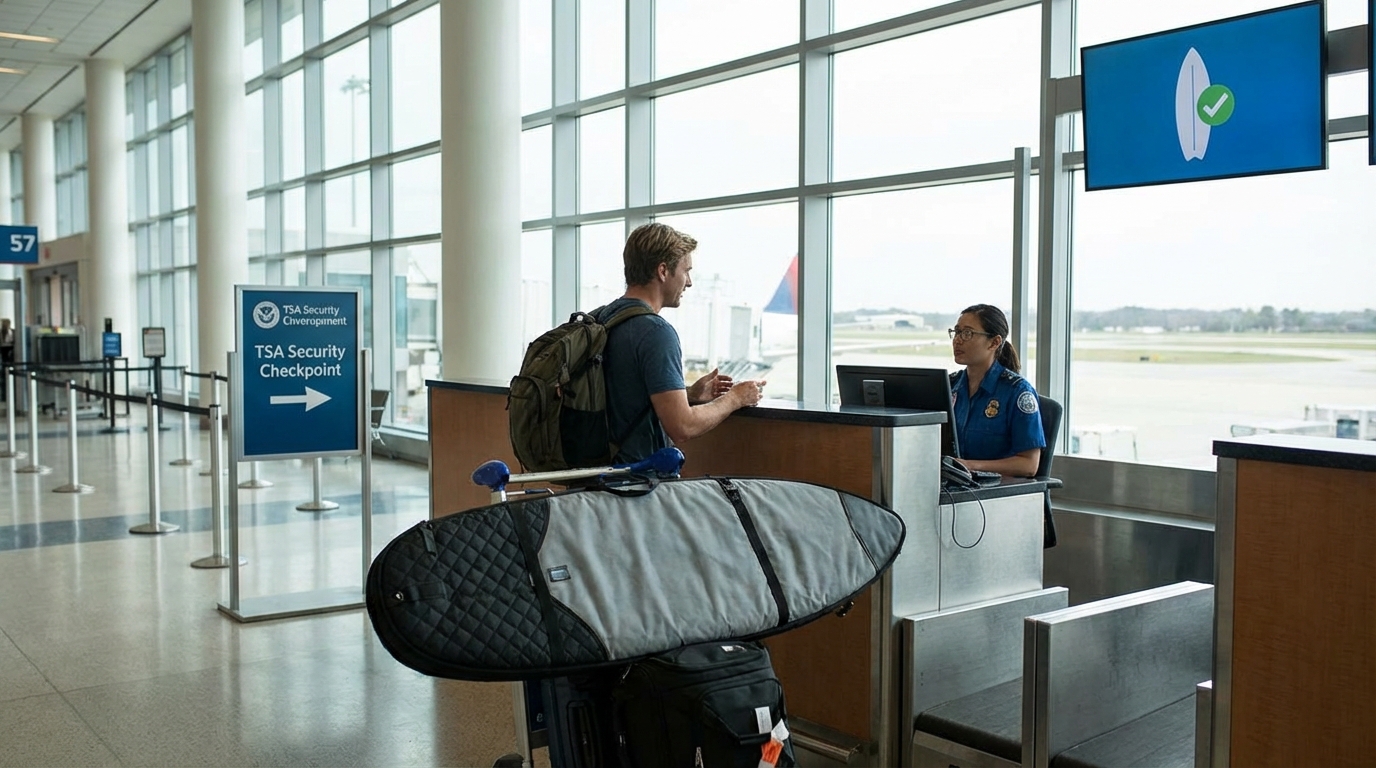
Yes, you can bring a surfboard on a plane as checked baggage. The TSA allows surfboards in checked bags only - they cannot be carried on due to size restrictions.
TSA Rules for Surfboards on Planes
The Transportation Security Administration (TSA) permits surfboards on airplanes, but only as checked baggage. Due to their size and shape, surfboards cannot be carried in the cabin and must be checked at the ticket counter or bag drop area before security.
Surfboards are classified as sporting equipment by the TSA, similar to golf clubs or ski equipment. They undergo standard security screening procedures, which may include physical inspection and explosive detection screening. The TSA reserves the right to inspect any checked item, including surfboards, if they determine additional screening is necessary.
Size and Weight Restrictions
While the TSA doesn't impose specific size limits on surfboards, individual airlines set their own restrictions for checked baggage dimensions and weight. Most airlines allow surfboards up to certain length limits, typically ranging from 6 feet to 9.5 feet, though some may accommodate longer boards with advance arrangements.
Standard weight limits for checked baggage apply to surfboards, usually 50 pounds for domestic flights and potentially higher for international routes. Exceeding these limits results in additional fees that can be substantial.
Airline-Specific Surfboard Policies
Each airline has distinct policies regarding surfboards, including fees, size restrictions, and booking requirements. Understanding these differences is crucial for planning your surf trip.
Major US Airlines
American Airlines allows surfboards up to 126 linear inches (length + width + height) with fees starting around $150 for domestic flights and up to $200 for international routes. Boards must be properly packed in a protective case.
Delta Airlines accepts surfboards as special sporting equipment with similar size restrictions. Fees vary by route and destination, typically ranging from $150-200. Delta requires advance notification for surfboard transport.
United Airlines permits surfboards up to 115 linear inches for most routes, with larger boards requiring special arrangements. Fees are comparable to other major carriers, and advance booking is recommended.
Southwest Airlines takes a different approach, allowing surfboards as part of their two free checked bags policy on many routes, though oversized baggage fees may apply for longer boards.
International and Budget Airlines
International carriers often have more generous size allowances but may charge higher fees. Budget airlines typically have stricter restrictions and higher charges for sporting equipment. Always check specific airline policies before booking, as these can change frequently.
Preparing Your Surfboard for Air Travel
Proper preparation is essential to ensure your surfboard arrives safely and avoids damage during transport.
Protective Cases and Bags
A high-quality surfboard bag or hard case is mandatory for air travel. Soft padded bags offer basic protection and are lighter, making them suitable for shorter boards and domestic travel. Hard cases provide maximum protection but add weight and bulk.
Consider double-bagging for extra protection, especially for valuable or custom boards. Place the board in a sock or thin bag first, then into the main travel case. This prevents movement and provides additional cushioning.
Packing Techniques
Remove all fins and pack them separately in bubble wrap or fin bags. Most airlines require removable fins to be detached to prevent damage during handling. Store leashes separately to avoid tangling or potential damage.
Fill empty spaces in the bag with towels, clothing, or bubble wrap to prevent the board from shifting. Pay special attention to the nose and tail areas, which are most vulnerable to impact damage.
Consider adding extra padding around the rails and any existing dings or repairs. Use pipe insulation, towels, or specialized padding to create cushioned barriers.
Booking and Check-in Process
Successfully traveling with a surfboard requires advance planning and proper communication with your airline.
Advance Notification
Most airlines require advance notification when traveling with sporting equipment like surfboards. Contact the airline at least 24-48 hours before travel to ensure space availability and confirm any special requirements.
Some airlines limit the number of sporting equipment items per flight, so early notification helps secure your spot. This is especially important during peak surf seasons or when traveling to popular surf destinations.
Airport Check-in
Arrive at the airport with extra time when checking a surfboard. The oversized baggage counter may have longer lines, and additional paperwork or inspection may be required.
Bring cash or a credit card for baggage fees, as these are typically collected at check-in. Keep receipts and documentation, including any special handling instructions provided by the airline.
Declaration and Insurance
Consider declaring a higher value for your surfboard if it's expensive or custom-made. Standard baggage liability limits may not cover the full replacement cost of high-end boards.
Check if your travel insurance or homeowner's/renter's insurance covers sporting equipment during travel. Some policies provide additional protection for valuable items transported as checked baggage.
Cost Considerations and Budgeting
Understanding the financial aspects of traveling with a surfboard helps with trip planning and budget allocation.
Typical Fee Ranges
Domestic US flights typically charge $75-200 for surfboard transport, depending on the airline and route. International flights can range from $150-300 or more, particularly for long-haul destinations.
Some airlines charge by piece, while others use a weight-based system. Round-trip fees are usually double the one-way rate, though some carriers offer slight discounts for return transport.
Hidden Costs
Oversized baggage fees apply if your board exceeds standard dimensions, even within the surfboard allowance. These can add $100-200 to your base fee.
Excess weight charges accumulate quickly if your packed board exceeds weight limits. Consider the weight of your case and packing materials when calculating total weight.
Alternative Transportation Options
Sometimes alternative arrangements may be more practical or cost-effective than flying with your board.
Shipping Services
Professional surfboard shipping services specialize in transporting boards safely and may offer competitive rates for certain routes. These services often provide better protection and tracking than airline baggage systems.
Shipping can be particularly advantageous for extended trips where you're flying multiple segments or when traveling with multiple boards.
Rental Options
Many surf destinations offer quality board rentals that may be more convenient and cost-effective than transport fees. Research local surf shops and rental facilities at your destination.
For surf trips where you're trying different spots or unsure about conditions, renting allows flexibility to choose appropriate boards for local conditions.
International Travel Considerations
Traveling internationally with a surfboard involves additional considerations beyond domestic flights.
Customs and Declarations
Some countries require declaration of sporting equipment or may impose duties on expensive boards. Research destination country requirements and be prepared to show receipts or proof of ownership.
Temporary import permits may be required for valuable boards in certain countries. Check with destination country customs authorities or consult with your airline's international desk.
Size and Weight Variations
International flights often have different baggage allowances than domestic routes. Some international carriers are more accommodating with sporting equipment dimensions.
Weight limits may be higher on international flights, but fees for excess weight can also be substantially more expensive.
Tips for Smooth Travel
Following these practical tips can help ensure your surfboard travels safely and your trip goes smoothly.
Documentation and Photos
Take detailed photos of your board before packing, documenting any existing damage or wear. This provides evidence if damage claims need to be filed.
Keep all boarding passes, baggage receipts, and airline correspondence. This documentation is essential for any potential claims or disputes.
Timing and Logistics
Plan connections with extra time when traveling with sporting equipment. Oversized baggage may take longer to transfer between flights.
Consider arriving a day early for important surf trips to allow time for any potential baggage delays or issues.
Communication
Stay in contact with airline staff throughout the check-in and boarding process. Polite communication often leads to better service and assistance with any issues that arise.
Get names and contact information of airline personnel who handle your board, especially if special arrangements are made.
Traveling with a surfboard requires planning and patience, but millions of surfers successfully transport their boards worldwide every year. By understanding TSA rules, airline policies, and proper preparation techniques, you can confidently bring your board on your next surf adventure while minimizing risks and costs.
Frequently Asked Questions
Can I carry a surfboard on the plane as carry-on luggage?
No, surfboards cannot be carried on planes due to size restrictions. They must be checked as baggage at the ticket counter.
How much does it cost to bring a surfboard on a plane?
Costs typically range from $75-200 for domestic flights and $150-300 for international flights, varying by airline and destination.
Do I need a special case to fly with my surfboard?
Yes, airlines require surfboards to be packed in protective cases or padded bags. Hard cases offer maximum protection while soft bags are lighter.
Written by Aviation Experts
Aviation Professionals
With decades of combined experience in the aviation industry, our team shares insider knowledge to make your travel experience smoother and less stressful.
Was this article helpful?