Can You Bring Protein Powder on a Plane?
Quick Answer
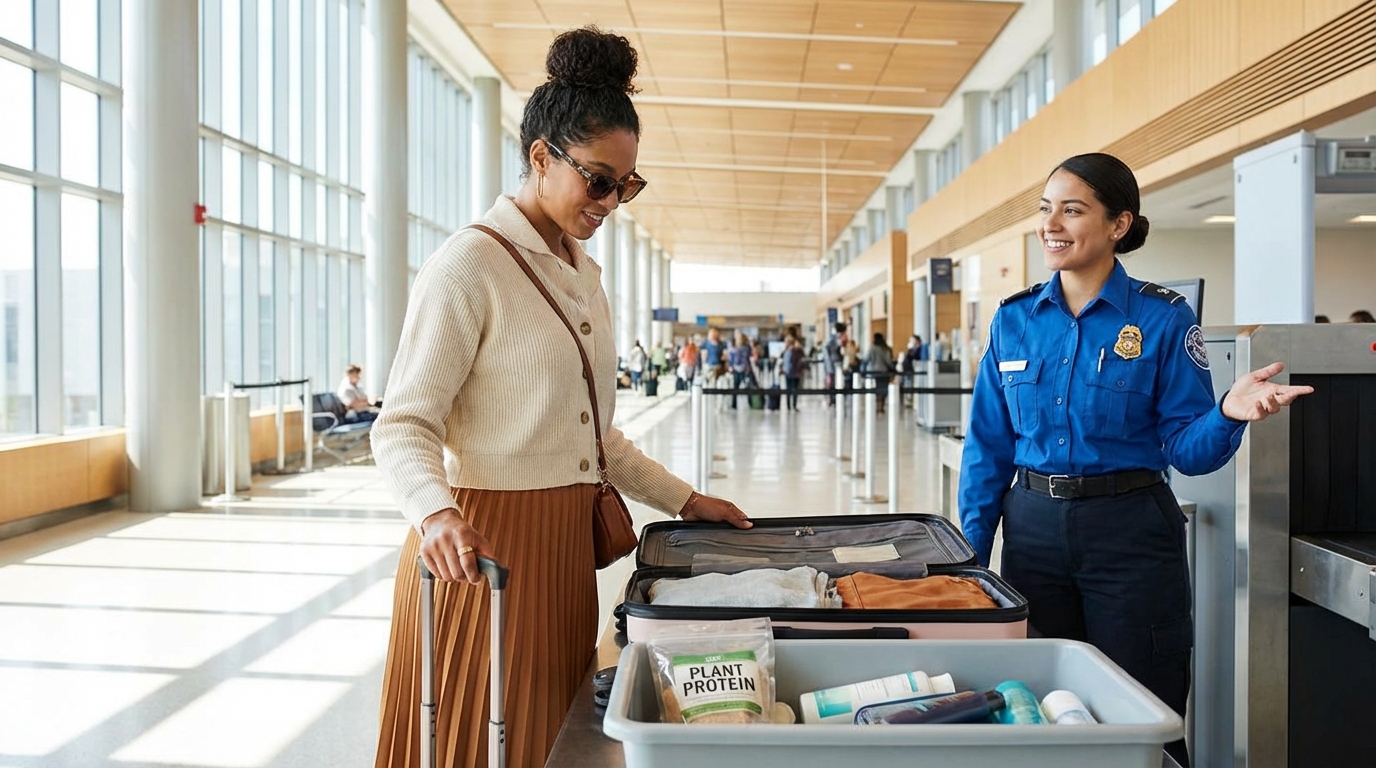
Yes, you can bring protein powder on a plane in both carry-on and checked bags. In your carry-on, containers over 12 ounces require separate X-ray screening and may be opened for inspection. Checked bags have no quantity limits.
Yes, you can bring protein powder on a plane. It's allowed in both carry-on and checked bags. But there's a 12-ounce threshold in carry-on that changes how your powder gets screened, and knowing this rule will save you time and stress at security.
The 12-Ounce Rule for Carry-On
The TSA has a specific rule for powder-like substances in carry-on bags:
- Under 12 ounces (350 ml): No special screening required. It goes through the X-ray like everything else in your bag.
- Over 12 ounces (350 ml): Must be placed in a separate bin for X-ray screening. May require additional inspection, including opening the container.
This isn't just a protein powder rule. It applies to all powders: baby formula, coffee, spices, cosmetic powders, pre-workout, creatine, you name it. The 12-ounce threshold refers to volume, not weight. Think of it as roughly the size of a soda can.
Here's the thing that catches people off guard: if your protein powder container is over 12 ounces and the TSA can't identify it through their screening process, they can confiscate it. That's not common with clearly labeled protein powder, but it does happen, especially with unlabeled containers or homemade mixes in generic bags. An unmarked ziplock bag of white powder is going to raise flags. Don't be that person.
Checked Bags: No Limits
There are no quantity restrictions for protein powder in checked luggage. Throw in a 5-pound tub if you want. The TSA doesn't have size or quantity limits for powders in checked bags.
This is the simplest option if you're bringing a large supply. No extra screening, no risk of confiscation, no delays at security. The only downside is that your checked bag gets heavier, and you might tip over the 50-pound weight limit if you're packing a lot of gear alongside a big tub of whey.
International Flights: Stricter Rules
If you're flying internationally, particularly on flights arriving into the United States from overseas, the rules get tighter. Powder-like substances over 12 ounces (350 ml) in carry-on bags coming from international last-point-of-departure airports will receive additional screening. If the powder can't be resolved at the checkpoint, it won't be allowed in the cabin and will be disposed of.
Translation: on international flights, keep your carry-on protein powder under 12 ounces or put it in your checked bag. Don't risk losing a $40 tub of whey because you didn't want to check it.
This is especially relevant if you're buying supplements abroad where labels might be in another language. A TSA agent who can't read the label is more likely to flag the container for additional screening, and if they still can't confirm what it is, it's going in the trash.
How to Pack Protein Powder for Carry-On
If you're keeping your powder in carry-on, here's how to do it smartly:
Keep It in the Original Container
Whenever possible, travel with the original, sealed packaging. A clearly labeled tub of "Gold Standard Whey Protein" is going to sail through security faster than a ziplock bag of mystery powder. TSA agents can see the label, verify what it is, and move on.
If your original container is too bulky, at least bring the label. Cut out the product info panel and tape it to whatever container you transfer the powder into. It looks a lot less suspicious than an unmarked bag.
Use Pre-Portioned Bags
If you don't want to lug a whole tub, measure out your servings into individual clear, resealable bags. Label each bag with a marker: "Protein Powder" or "Whey Protein." This makes it obvious what it is during screening.
Some companies sell single-serve protein powder packets that are perfect for travel. They're pre-measured, sealed, and clearly labeled. Brands like Dymatize, Optimum Nutrition, and Garden of Life all make travel-friendly single-serve options. They cost a bit more per serving than buying in bulk, but the convenience is worth it.
Use a Clear Container
If you're transferring powder to a reusable container, use a clear one. TSA agents can visually identify the contents without opening it, which speeds up the screening process. Several companies make travel-specific containers with screw-on compartments designed for supplements and powders.
Keep It Accessible
If your container is over 12 ounces, you'll need to pull it out and place it in a separate bin, just like your laptop and liquids bag. Pack it near the top of your carry-on so you're not digging around at the conveyor belt holding up the line behind you.
Pre-Workout and Other Supplements
The same 12-ounce rule applies to all powder supplements:
- Pre-workout powder: Same rules as protein powder. Under 12 oz stays in the bag, over 12 oz gets separate screening.
- Creatine: Allowed. Same powder rules apply.
- BCAAs: Allowed in powder form. Same rules.
- Greens powders: Allowed. These are becoming more popular for travel since they're a compact way to get nutrients on the road.
- Electrolyte powder: Allowed. Individual stick packs are the most travel-friendly option.
- Capsules and pills: Vitamins and supplement capsules don't fall under the powder rule. They go through screening like any other personal item. No quantity limits.
- Ready-to-drink protein shakes: These are liquids and must follow the 3-1-1 rule in carry-on (3.4 oz or less). Pack full-size bottles in checked bags.
Protein Bars: No Restrictions
Protein bars are solid food items and have no restrictions whatsoever. Carry-on, checked bags, your pockets. Bring as many as you want. They don't trigger any special screening.
If you want zero hassle, swap your powder for bars on travel days. It's the simplest solution. Most bars give you 20-30 grams of protein per serving, and you don't need water or a shaker to eat them. Many frequent travelers keep a few bars in their carry-on as a default travel habit.
Mixing on the Go
You can't bring a full shaker bottle of liquid through security (it's over 3.4 ounces). But here's the play: bring your powder and an empty shaker bottle through security, then fill it with water at a fountain or buy a water bottle after you're past the checkpoint.
Some airports have filtered water stations specifically designed for filling bottles. Your protein shake is just a water fountain away. Most airport restaurants and cafes will also give you a cup of water for free if you ask.
A quick mixing tip for travel: bring a small whisk ball or use a shaker bottle with a built-in mixing mechanism. Trying to mix powder with a spoon in a smooth-walled cup at the airport gate will leave you with a clumpy, sad shake. The shaker ball makes all the difference.
What If TSA Wants to Open My Container?
Don't panic. TSA agents may ask to open and visually inspect or swab-test your protein powder. This is routine for containers over 12 ounces. They're checking for prohibited substances, not judging your supplement choices.
The swab test takes about 30 seconds. They'll wipe the outside of the container (or sometimes the powder itself), run the swab through a detection machine, and clear you once it comes back clean. Be patient and cooperative. Getting frustrated or impatient won't speed things up.
If your container is factory-sealed, they're less likely to open it. Another reason to travel with the original packaging when possible. Once a container has been opened at security, you'll want to seal it back up carefully. Bring a rubber band or bag clip just in case.
Traveling Internationally with Supplements
Beyond the TSA screening rules, international travelers should know that some countries have restrictions on supplement imports. Certain ingredients that are legal in the U.S. might be regulated or banned in other countries. Australia, for example, has strict rules about bringing food products including protein powder across the border.
Always declare food items and supplements at customs when entering a foreign country. Failing to declare can result in fines, even if the product itself is legal. Most protein powder will be fine, but it's better to declare and be waved through than to get caught not declaring and face a penalty.
Quick Reference
- Carry-on under 12 oz: Allowed, no special screening
- Carry-on over 12 oz: Allowed, requires separate bin and possible inspection
- Checked bags: Allowed, no quantity limits
- International carry-on over 12 oz: May be confiscated if it can't be identified
- Protein bars: No restrictions anywhere
- Ready-to-drink shakes: Follow liquid 3-1-1 rule in carry-on
- Capsules and pills: No quantity limits, no special screening
Frequently Asked Questions
Will TSA take my protein powder?
Unlikely if it's clearly labeled and in the original container. However, containers over 12 ounces may be opened for inspection, and powder that can't be identified through screening can be confiscated, especially on international flights.
Should I put protein powder in my carry-on or checked bag?
Checked bags are easier since there are no quantity limits and no extra screening. For carry-on, keep containers under 12 ounces to avoid additional inspection. If you need more, check the larger container.
Can I bring pre-workout powder on a plane?
Yes. Pre-workout powder follows the same TSA rules as protein powder. Under 12 ounces in carry-on with no special screening, over 12 ounces requires a separate bin and possible inspection. No limits in checked bags.
Can I bring a protein shaker bottle through security?
Yes, but it must be empty. Any liquid in the bottle must be under 3.4 ounces. Bring the empty bottle with your powder through security, then fill it at a water fountain after you're past the checkpoint.
Written by Aviation Experts
Aviation Professionals
With decades of combined experience in the aviation industry, our team shares insider knowledge to make your travel experience smoother and less stressful.
Was this article helpful?