Can You Bring Live Fish on a Plane?
Quick Answer
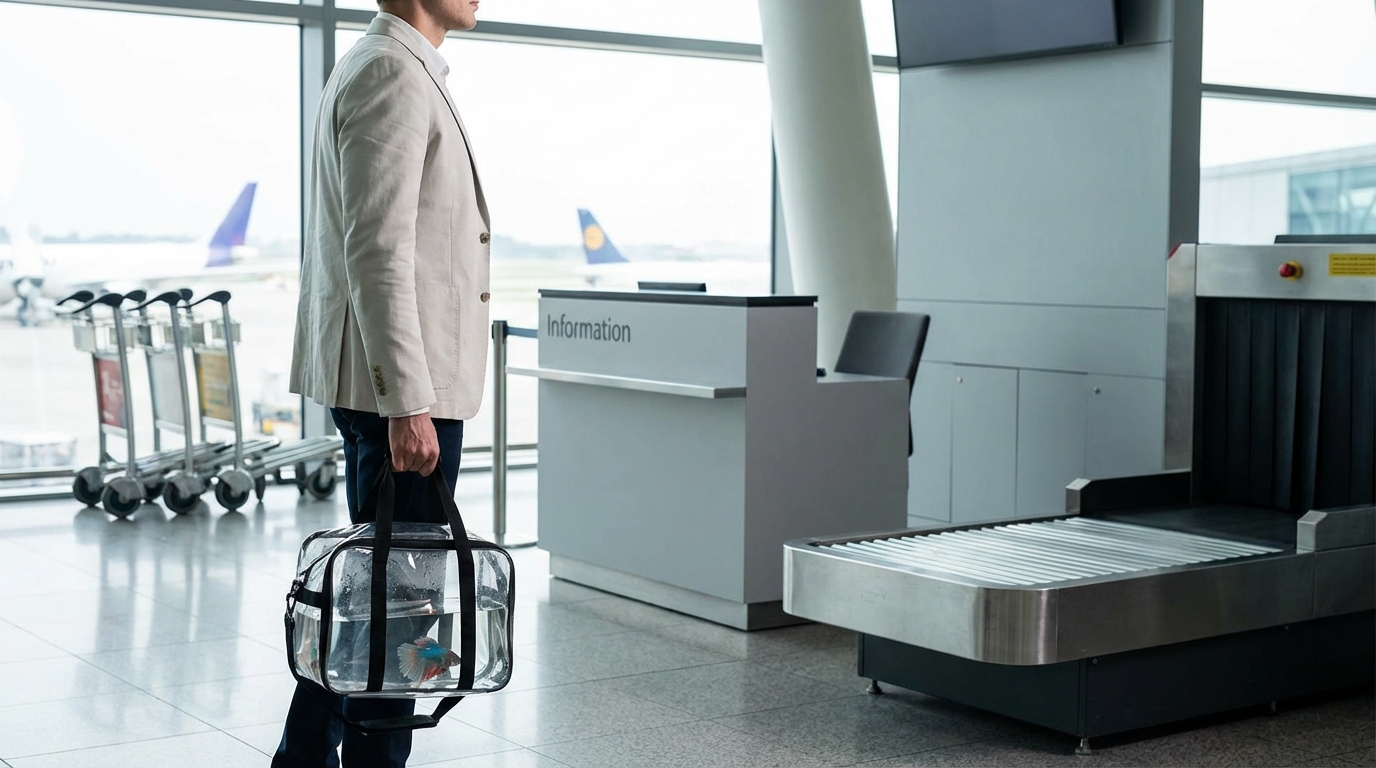
Yes, the TSA allows live fish in carry-on bags. They must be in a clear, spill-proof container with water, and the normal liquid restrictions don't apply. However, you must check with your airline since some carriers don't allow live fish on board.
Yes, the TSA allows live fish on planes. They must be in a clear, transparent, spill-proof container, and the water they're swimming in is exempt from the normal 3-1-1 liquid rule. But before you start packing your aquarium, there's a big catch: your airline might say no. The TSA and the airlines have separate rules, and you need to satisfy both.
TSA Rules for Live Fish
The TSA's rules are surprisingly straightforward:
- Allowed in carry-on bags only. Live fish cannot go in checked luggage.
- Must be in a clear, transparent container. The TSA needs to be able to visually inspect the fish and water.
- Container must be spill-proof. No open bowls or bags that could leak.
- Liquid rule exemption. The water your fish is in doesn't count toward the 3-1-1 limit. You can bring more than 3.4 ounces of water as long as the fish is alive and in it.
- Subject to visual inspection. A TSA officer will look at your fish at the checkpoint. They won't put it through the X-ray machine if you tell them about it upfront.
That last point is worth emphasizing. When you get to the security line, tell the TSA agent right away that you're carrying live fish. Don't let them discover it when your bag goes through the X-ray. Proactively mentioning it makes the process smoother for everyone.
One more thing: the liquid exemption only applies to water carrying live fish. You can't fill a huge jug of water, drop a goldfish in it, and claim the exemption for drinking water. TSA agents aren't going to let you bring a gallon of water through just because there's a fish swimming in it. Use a reasonable amount of water for the size and number of fish you're transporting.
Check Your Airline First
This is the step most people skip, and it's the one that matters most. While the TSA allows live fish, individual airlines set their own rules about what can come into the cabin.
Some airlines allow live fish. Others don't. And policies can vary by route, aircraft type, and even the mood of the gate agent. Here's what you need to do:
- Call your airline directly. Don't rely on their website alone. Call customer service and ask specifically about live fish in carry-on bags. Get the agent's name and note the date and time of the call.
- Get it in writing if possible. Ask for an email confirmation or reference number.
- Check at the gate. Even with approval, a gate agent could push back. Having documentation helps tremendously.
United Airlines, for example, has been known to prohibit live fish. Southwest and JetBlue tend to be more lenient, but policies change. Always confirm before your travel date, not at the airport when it's too late to change plans.
If your airline doesn't allow live fish and you can't switch carriers, you'll need to explore shipping options (more on that below).
How to Pack Fish for a Flight
Getting your fish through TSA is one thing. Keeping them alive and healthy during the journey is another. Here's how experienced aquarists handle it:
Container Options
The best container is a clear, rigid, spill-proof one with a secure lid. Think along the lines of a clear plastic Kritter Keeper or a large clear deli container with a tight-fitting lid. The container needs to be:
- Clear enough for TSA to see inside
- Secure enough that it won't leak when tilted or jostled
- Large enough that the fish has room but small enough to fit under the seat in front of you
Avoid using opaque containers or colored bags. The TSA requires clear containers for a reason: they need to visually confirm what's inside. If they can't see your fish, they'll make you open the container, which stresses the fish and takes more time.
Double Bagging Method
Many fish hobbyists use the same method fish stores use for selling fish: thick plastic bags filled with about one-third water and two-thirds air (or pure oxygen, if you can get it from a fish store). Double bag the fish with both bags oriented the same direction, seal with rubber bands, and place the bags inside a rigid container or insulated cooler.
This method keeps the water oxygenated longer and provides cushioning. Just make sure the outer container is still clear enough for TSA to inspect. If you use a Styrofoam cooler, you may need to open it for the agent since Styrofoam isn't transparent.
Ask your local fish store if they'll bag your fish with pure oxygen. Most stores have oxygen tanks and are happy to help, especially if you explain you're flying. Oxygen-filled bags dramatically extend how long fish can survive in transit, sometimes up to 72 hours for hardy species.
Water and Temperature
- Use aquarium water, not tap water. Fill the bag or container with water from the fish's tank. This maintains the right chemistry and reduces stress. Tap water contains chlorine and chloramines that can harm fish.
- Fill about one-third water. The rest should be air (or oxygen). More water means more weight and less oxygen exchange at the surface.
- Temperature control. Use an insulated bag or small cooler. For tropical fish, add a heat pack wrapped in newspaper (not directly touching the bag). For cold-water fish, you likely won't need any temperature control unless you're in extreme heat. Airplane cabins typically stay around 65-72 degrees Fahrenheit, which is fine for most species.
- Don't feed the fish before travel. Skip feeding for 24-48 hours before the flight. Fish produce waste, and in a small container with no filtration, waste buildup can be toxic. A healthy fish can easily go a couple days without food.
At the Airport
Here's a step-by-step for getting through the airport with your fish:
- Arrive early. Give yourself at least an extra 30 minutes. The inspection process is unusual, and it may take a few minutes longer than normal screening.
- Tell TSA immediately. When you approach the conveyor belt, let the agent know you have live fish. They'll handle it separately from the X-ray machine.
- Print out the TSA policy. This is a pro tip from experienced fish flyers. Print the TSA's "What Can I Bring" page showing that live fish are allowed. Some TSA agents at smaller airports may not be familiar with the rule. Having the printout saves you from a debate at the checkpoint.
- Be prepared for curiosity. TSA agents, gate agents, and fellow passengers will be curious. You'll answer the question "Is that a fish?" approximately 47 times. Have fun with it.
- Keep the fish stable. Once you're past security, don't swing the bag around. Keep it level and steady. Turbulence during the flight is unavoidable, but your handling before and after is within your control.
On the Plane
Your fish container goes under the seat in front of you. Don't put it in the overhead bin where it could shift, tip, or get crushed by other bags. You want it where you can keep an eye on it and where it stays relatively level.
During the flight, resist the urge to constantly check on the fish. Every time you open or move the container, you're adding stress. Let them ride in peace. If the container is insulated and properly packed, the fish will be fine for flights up to 6-8 hours.
If you have a long layover between connecting flights, find a quiet spot to check on the fish. Make sure the bag hasn't leaked and the water temperature still feels reasonable. You can't do much about water quality at this point, but at least confirming the fish is alive and the container is intact gives you peace of mind.
How Long Can Fish Survive in Transit?
With proper packing, most freshwater fish can survive 24-48 hours in a sealed bag. Some hardier species, like bettas, goldfish, and guppies, can last even longer. Delicate species like discus or some marine fish are riskier for travel.
The biggest threats during transit are:
- Oxygen depletion. The two-thirds air/one-third water ratio helps, but long flights with connections push the limits. Pure oxygen extends this window significantly.
- Temperature swings. Airplane cabins are cool, and cargo areas are cold. Insulation is essential for tropical species.
- Ammonia buildup. Fish waste in a small, unfiltered container gets toxic fast. That's why you skip feeding beforehand.
- Stress. Movement, noise, and temperature changes stress fish. Minimize handling and keep the container dark (inside an insulated bag) to calm them.
Best Fish Species for Air Travel
Some fish are built for travel. Others aren't. If you have a choice about which fish to transport by air, here's a rough guide:
- Great travelers: Bettas, goldfish, guppies, tetras, corydoras, most livebearers. These species are hardy, tolerate temperature swings, and handle confinement well.
- Decent travelers: Cichlids (most species), plecos, barbs, danios. Tougher fish that can handle some stress but may need more careful packing.
- Risky travelers: Discus, delicate marine fish, large fish that need a lot of water volume, fish sensitive to water chemistry changes. Consider shipping these with a professional.
Shipping vs. Flying With Fish
If you're moving or transporting valuable fish, consider whether shipping might be a better option. Many aquarium stores and online fish retailers ship fish via overnight courier every day. The fish are packed by professionals, travel in insulated boxes with heat or cold packs, and arrive at your door.
Shipping costs $30-$60 for overnight delivery, which is often less hassle than carrying fish through an airport. For rare or expensive fish, some specialty shippers offer guaranteed live arrival. If the fish doesn't make it, they'll refund or replace it.
Saltwater Fish and Coral
Saltwater fish follow the same TSA rules as freshwater. However, they're generally more sensitive to temperature changes and water quality, making them harder to transport. If you're moving marine fish, seriously consider professional shipping.
Live coral is also allowed by the TSA in carry-on bags, following the same clear container rules. But coral has additional legal considerations. Some coral species are regulated under CITES (Convention on International Trade in Endangered Species), so transporting them across state or international lines may require permits.
Quick Reference
- TSA carry-on: Allowed in a clear, spill-proof container
- Checked bags: Not allowed
- Liquid rule: Water for live fish is exempt from the 3-1-1 rule
- Airlines: Must check with your specific airline, policies vary
- Don't feed fish: Skip meals for 24-48 hours before travel
- Pack light on water: One-third water, two-thirds air
- On the plane: Under the seat in front of you, not the overhead bin
Frequently Asked Questions
Does the TSA liquid limit apply to water for live fish?
No. Water used to transport live fish is exempt from the 3-1-1 liquid rule. You can bring more than 3.4 ounces of water as long as the fish is alive and in a clear, spill-proof container.
Can I put live fish in my checked bag?
No. Live fish are only allowed in carry-on bags. The cargo hold isn't temperature-controlled on most aircraft, and the TSA requires live fish to be visually inspected at the checkpoint.
Do all airlines allow live fish?
No. While the TSA permits live fish, each airline sets its own policy. Some airlines like United have been known to prohibit them. Always call your airline before your trip to confirm their policy on live fish.
How long can fish survive during air travel?
With proper packing (one-third water, two-thirds air, insulated container), most freshwater fish can survive 24-48 hours. Hardy species like bettas and goldfish can last longer. Skip feeding for 24-48 hours before travel to reduce ammonia buildup.
Written by Aviation Experts
Aviation Professionals
With decades of combined experience in the aviation industry, our team shares insider knowledge to make your travel experience smoother and less stressful.
Was this article helpful?