Can You Bring Knitting Needles on a Plane?
Quick Answer
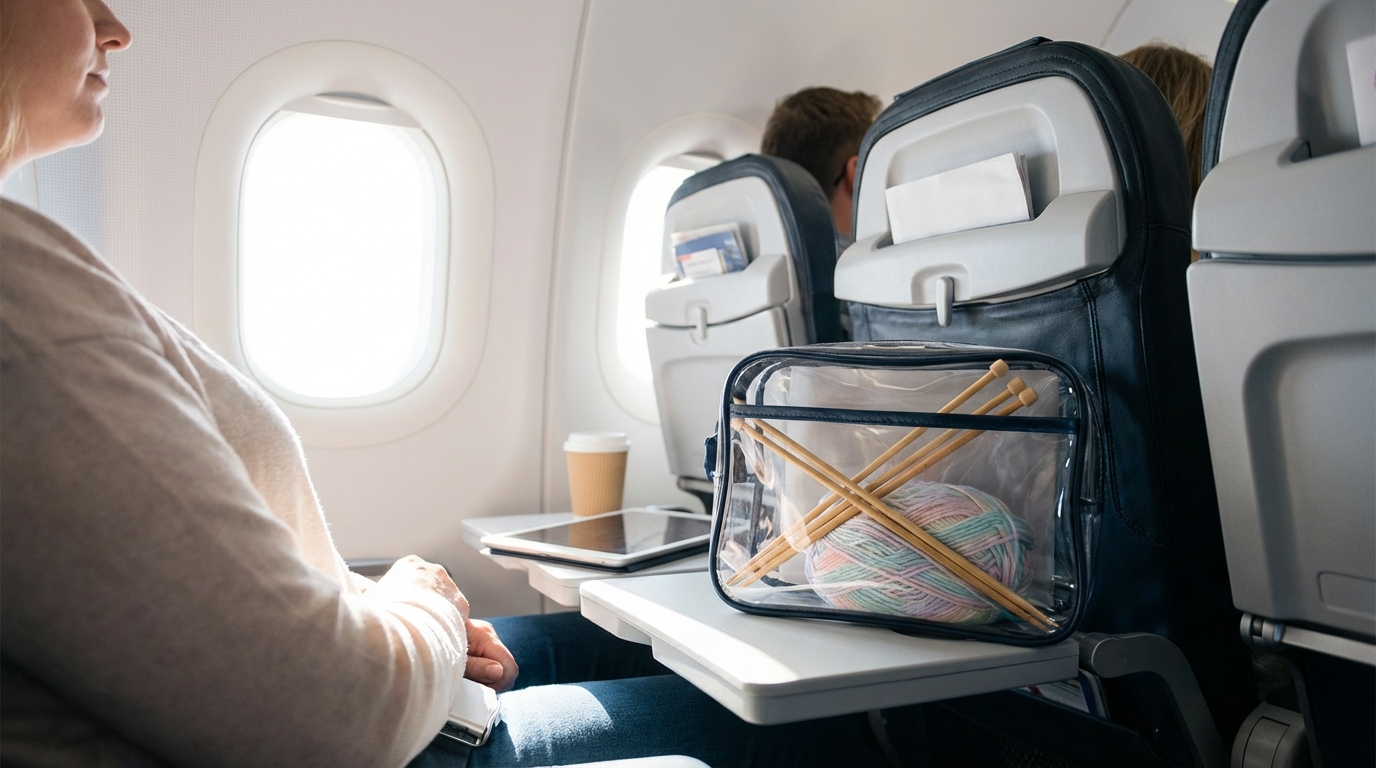
Yes, knitting needles are allowed in both carry-on and checked bags. The TSA permits all types including metal, bamboo, wooden, and circular needles. Here's what you need to know before you fly.
Good news for crafters: you can absolutely bring knitting needles on a plane. The TSA allows them in both carry-on and checked bags, so feel free to work on that scarf at 35,000 feet.
The Quick Answer
Knitting needles are permitted in carry-on and checked luggage. This applies to all types: straight needles, circular needles, double-pointed needles, and crochet hooks. Metal, bamboo, wooden, plastic -- they're all fine.
That said, there are a few nuances worth knowing before you pack your project bag. Not every TSA officer is familiar with knitting supplies, and some of your accessories might not be as welcome as the needles themselves.
What the TSA Actually Says
The TSA's official "What Can I Bring?" page lists knitting needles as allowed in both carry-on and checked bags. No size restrictions. No material restrictions. No limits on quantity.
This also covers:
- Crochet hooks
- Sewing needles
- Knitting needles of any length
- Double-pointed needles (DPNs)
- Circular needles
- Tapestry needles
- Cable needles
So technically, you could bring a full set of 14-inch straight metal needles and you'd be within the rules. The TSA considers knitting needles a craft tool, not a potential weapon -- which is why they get a pass even though they're pointy.
What You Can't Bring
Here's where it gets tricky. While the needles themselves are fine, some knitting accessories are not:
- Circular thread cutters with blades -- checked bag only
- Rotary cutters -- checked bag only
- Scissors longer than 4 inches from the pivot point -- checked bag only
- Seam rippers with exposed blades -- technically allowed, but may get flagged
Scissors under 4 inches are allowed in your carry-on, so a small pair of craft scissors is fine. But leave the fabric shears at home or pack them in checked luggage. Basically, if an accessory has a sharp blade designed for cutting, assume it either needs to be small or go in your checked bag.
Best Needles for Flying
While all needles are technically allowed, some are smarter choices than others for air travel. The right choice can mean the difference between a smooth security experience and a stressful one.
Circular Needles (Top Pick)
Circular needles are the best option for flying. Both needle tips connect to a flexible cable, which means nothing rolls off your lap or falls between seats. Your work stays compact and contained. Plus, they look less "pointy" to security officers who might not be familiar with knitting supplies.
Circular needles also take up less space in your bag and let you work on wider projects without bumping into your seatmate's arm. If you only buy one set of needles for travel, make it circulars.
Bamboo or Wooden Needles
These are less likely to trigger extra attention at the X-ray machine compared to metal needles. They also won't set off metal detectors if you accidentally leave them in a pocket. Bamboo circulars with blunt tips are the gold standard for flying knitters.
Another benefit: bamboo and wood have a natural grip that keeps stitches from sliding off, even during turbulence. They're quieter too -- no clicking sounds to annoy your seatmate.
Metal Needles
Totally allowed, but they show up clearly on X-ray screens and can occasionally prompt a bag check. Not a big deal -- just be prepared for the possibility. Metal needles are also the fastest to knit with, so if speed is your priority and you don't mind a potential quick inspection, go for it.
Needles to Avoid
Extra-long straight needles (14 inches) are allowed but can be awkward in tight airline seats. They also look more intimidating to unfamiliar TSA officers. Stick with shorter needles or circulars for a smoother experience. Glass needles, while beautiful, are fragile and a poor choice for the chaos of air travel.
The "TSA Officer Discretion" Factor
Here's the reality that every traveling knitter needs to understand: TSA officers have final authority over what goes through the checkpoint. Even though the official policy allows knitting needles, an individual officer can still flag them.
This is rare, but it happens. If an officer decides your needles can't go through, there's no appealing on the spot. You can politely point out the TSA's official policy, but ultimately the officer's decision is final.
To protect yourself:
- Bring a self-addressed stamped envelope so you can mail items back to yourself if needed
- Use a lifeline through your stitches so your work doesn't unravel if needles are confiscated
- Carry a screenshot of the TSA's knitting needle policy on your phone
- Choose inexpensive needles for travel rather than your favorite Addi Turbos
- Keep your project looking recognizable -- a half-finished sock on needles clearly reads as "crafting" rather than something suspicious
If you do get your needles taken, ask the TSA officer about mailing options. Many larger airports have postal services or mail drop boxes near the security area specifically for this situation.
What to Do If Needles Are Confiscated
It's unlikely, but if it happens, don't panic. Your first priority is saving your work in progress.
If you threaded a lifeline (a piece of scrap yarn woven through your live stitches), your work is safe. Without a lifeline, your stitches could unravel once the needles are pulled out. This is why experienced flying knitters always run a lifeline before heading to the airport.
You can also ask the officer for a moment to secure your stitches with a crochet hook, stitch holder, or even a pencil before handing over the needles. Most officers will give you a minute to do this.
International Flights: Check Before You Pack
TSA rules only apply to flights departing from U.S. airports. Other countries have their own security regulations, and some are stricter.
- Canada (CATSA) -- Knitting needles are allowed in carry-on
- United Kingdom -- Generally allowed, but it's at the officer's discretion
- Australia -- Knitting needles are allowed in carry-on
- European Union -- Generally permitted, but policies vary by country and airport
- Some countries in Asia and the Middle East -- May prohibit knitting needles entirely
If you're flying internationally, check the security rules for every country you'll pass through, including layover countries. What's fine leaving the U.S. might not be fine boarding a connecting flight in another country. When in doubt, pack needles in your checked bag for international legs and bring a small crochet project with a plastic hook for the cabin.
Smart Packing Tips for Knitting on a Plane
A few practical tips from experienced flying knitters:
- Wind your yarn before you fly. A center-pull ball or cake is much easier to manage in a cramped seat than a loose skein. Nobody wants yarn tangled around their armrest or rolling under the seat in front of them.
- Bring a crochet hook as backup. If your needles get confiscated, you can use a crochet hook to secure your stitches and prevent unraveling. A small plastic one takes up zero space.
- Use stitch markers. Turbulence happens. Mark your place so you don't lose your spot. Locking stitch markers are better than ring markers for travel since they won't slip off.
- Pick a simple project. Save the intricate lace pattern for solid ground. Stockinette, garter stitch, or simple ribbing are perfect for plane knitting. You want something you can put down instantly during turbulence or beverage service.
- Bring a small pair of scissors (under 4 inches) or use a pendant-style thread cutter without a blade. Dental floss containers also work in a pinch for cutting yarn.
- Use a project bag with a zipper. This keeps your yarn from rolling around and makes it easy to stow everything quickly during takeoff and landing.
- Bring a row counter. Between announcements, turbulence, and conversation, it's easy to lose track of where you are in a pattern.
Choosing the Right Project for Air Travel
Not every knitting project is suited for a cramped airline seat. Here's what works best:
Great choices: Socks, hats, scarves, dishcloths, simple shawls, and anything worked flat or in a small round. These projects are compact, don't require constant pattern reference, and are easy to stuff in a seat pocket during beverage service.
Avoid: Large blankets or afghans (too bulky), intricate colorwork (too many yarn ends), lace with complex charts (too hard to read in dim cabin lighting), and anything on long straight needles (you'll elbow your seatmate).
The ideal plane project is something you can work on almost mindlessly, pause at any point, and pick up again without needing to figure out where you left off.
What About Crochet Hooks?
Same rules apply. Crochet hooks are allowed in both carry-on and checked bags. All materials and sizes are permitted. The same tips about choosing bamboo or plastic over metal apply here too.
Crochet actually has a slight edge over knitting for air travel: you only have one hook and one active loop instead of dozens of live stitches. If your hook gets confiscated mid-project, there's only one stitch to secure. And crochet projects tend to be more compact since the fabric grows in tighter loops.
Needlepoint and Cross-Stitch
While we're covering fiber arts, needlepoint and cross-stitch supplies are also allowed in carry-on bags. Tapestry needles, embroidery needles, and cross-stitch needles are all permitted. These are even less likely to raise eyebrows at security than knitting needles since they're smaller and often blunt-tipped.
The same accessory rules apply: small scissors (under 4 inches) are fine, but thread cutters with blades need to go in checked luggage.
Frequently Asked Questions
Can I bring metal knitting needles on a plane?
Yes. The TSA allows metal knitting needles in both carry-on and checked bags. However, bamboo or wooden needles are less likely to trigger extra screening at the X-ray machine.
Can TSA confiscate my knitting needles?
Technically, yes. While TSA policy allows knitting needles, individual officers have final discretion. It's rare, but it can happen. Bring inexpensive needles when flying and thread a lifeline through your stitches as a precaution.
Are circular knitting needles allowed on planes?
Yes. Circular needles are actually the best choice for flying because the tips stay connected by a cable, reducing the chance of dropping a needle and keeping your project compact.
Can I bring a yarn cutter on a plane?
It depends on the type. Circular thread cutters or any cutters with blades must go in checked bags. Small scissors under 4 inches from the pivot point are allowed in carry-on. Blade-free pendant cutters are generally fine.
Can I knit on international flights?
TSA rules allow knitting needles on flights departing from U.S. airports. However, other countries have different rules. Canada and Australia generally allow them, but some countries in Asia and the Middle East may not. Always check the security rules for your departure and layover countries.
Written by Aviation Experts
Aviation Professionals
With decades of combined experience in the aviation industry, our team shares insider knowledge to make your travel experience smoother and less stressful.
Was this article helpful?