Can You Bring Hand Warmers on a Plane?
Quick Answer
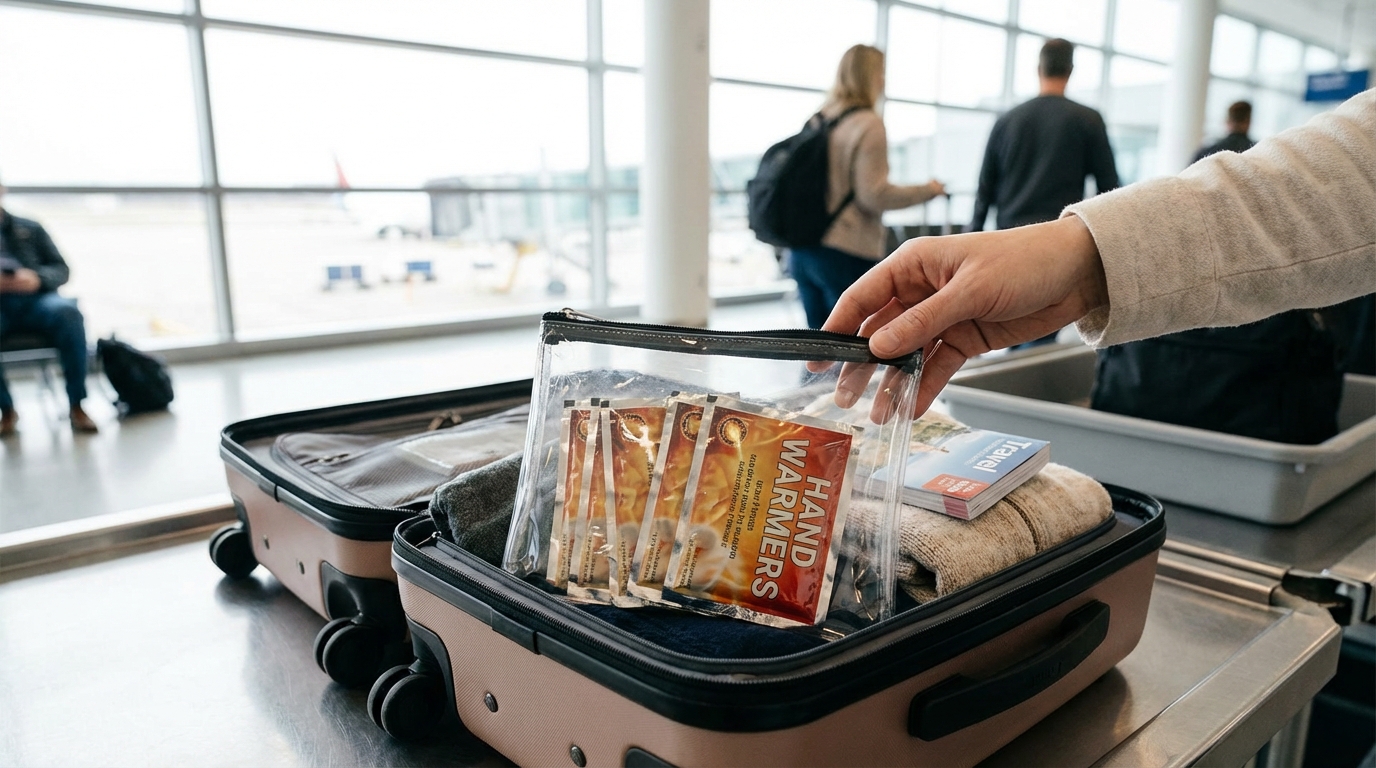
Yes, you can bring hand warmers on a plane — but the rules depend on the type. Disposable air-activated warmers go in carry-on or checked bags. Rechargeable ones must stay in your carry-on. Fuel-powered warmers are banned entirely.
The Short Answer
Yes, most hand warmers are allowed on planes. Disposable, air-activated hand warmers like HotHands are permitted in both carry-on and checked bags with no restrictions. Rechargeable battery-powered warmers are carry-on only. Gel-based warmers follow the 3-1-1 liquids rule. And fuel-powered warmers? Those are banned completely.
The key is knowing what type you've got, because TSA treats each one differently. Let's break it down by type so you know exactly what to pack and where.
Disposable (Air-Activated) Hand Warmers
These are the most common type — the little packets you shake or open and they heat up on their own. Brands like HotHands, Little Hotties, and Grabber make them. They work through a chemical reaction between iron powder, carbon, salt, and air.
TSA says: Allowed in carry-on and checked bags.
Since they're not classified as hazardous materials, there's no limit on how many you can bring. Toss a dozen in your carry-on if you want. Just keep them sealed until you're ready to use them — once activated, they can't be turned off, and they'll stay warm for 8-12 hours.
Pro tip for chilly flights
These are actually a great hack for cold planes. Crack one open after boarding and slip it under a blanket or inside a hoodie pocket. They're small, odorless, and TSA-friendly — the perfect carry-on companion for red-eye flights with aggressive air conditioning.
Rechargeable (Battery-Powered) Hand Warmers
Electric hand warmers with lithium-ion batteries — like the Ocoopa, Zippo Heatbank, or various USB-rechargeable models — have become hugely popular. They're reusable, adjustable, and many double as portable phone chargers.
TSA says: Carry-on only. Not allowed in checked bags.
This is the critical rule to remember. Because these contain lithium-ion batteries, they follow the same rules as power banks and portable chargers — they must go in your carry-on bag, never in checked luggage. Lithium batteries in the cargo hold are a fire risk, which is why TSA and the FAA are strict about this.
There's also a size limit: the battery can't exceed 100 watt-hours (Wh). Most consumer hand warmers fall well under this — a typical rechargeable hand warmer has a 5,000-10,000 mAh battery at 3.7V, which works out to roughly 18-37 Wh. You'd need an absurdly large hand warmer to hit 100 Wh.
If you can't find the watt-hour rating on your device, here's the formula: multiply milliamp-hours (mAh) by voltage (V), then divide by 1,000. A 10,000 mAh device at 3.7V = 37 Wh — well within the limit.
Gel-Based (Reusable Click) Hand Warmers
These are the ones with a supersaturated sodium acetate solution inside. You click a metal disc, the liquid crystallizes, and it releases heat. You recharge them by boiling them in water.
TSA says: Must follow the 3-1-1 liquids rule in carry-on.
Because they contain a gel/liquid, TSA treats them like any other liquid. That means:
- Each warmer must be 3.4 ounces (100 ml) or less
- They must fit inside your quart-sized clear zip-top bag
- They count toward your total liquids allowance
Most gel hand warmers are small enough to comply, but they'll eat into your liquids bag space. If you're already packing toiletries, shampoo, and sunscreen, you might not have room. In that case, pack them in checked luggage where there's no liquid restriction.
Fuel-Powered (Catalytic) Hand Warmers
Zippo's classic hand warmer and similar catalytic models use lighter fluid or butane to generate heat. They're effective in extreme cold, but they've got a big problem for air travel.
TSA says: Banned from carry-on AND checked bags.
Any device containing flammable liquid or gas is prohibited on aircraft — period. This includes the warmer itself and any fuel refills. Don't try to bring an empty one either; if it's been used, there's likely residual fuel inside, and TSA officers won't take that chance.
If you use a fuel-powered warmer at your destination, buy lighter fluid when you arrive or ship it separately via ground transport.
Toe Warmers and Body Warmers
Toe warmers, body warmers, insole warmers, and neck warmers that use the same air-activated iron powder technology as disposable hand warmers follow the same rules — allowed in both carry-on and checked bags. The adhesive backing on toe warmers doesn't change anything.
Larger body warmers (the kind that stick to your back or chest) are also permitted. TSA doesn't differentiate between sizes of air-activated warmers.
What About Using Hand Warmers During the Flight?
There's no TSA or airline rule against activating a disposable hand warmer during a flight. They don't produce flames, fumes, or any hazardous byproducts. They just get warm.
Rechargeable hand warmers can also be used in-flight, just like you'd use a portable phone charger. Some flight attendants may not be familiar with them, though, so don't be surprised if you get a question about what the glowing device in your hands is.
The only type you absolutely cannot use on a plane is the fuel-powered kind — but those shouldn't be on the plane in the first place.
International Travel Considerations
TSA rules cover flights departing from U.S. airports. If you're flying internationally, check the security regulations of your destination and any transit countries. Most follow similar guidelines:
- Canada (CATSA): Air-activated and carbon-based hand warmers are allowed in carry-on and checked bags
- Europe (ECAC): Disposable warmers are generally permitted; lithium battery devices follow the same 100 Wh carry-on rule
- Asia/Australia: Rules vary by country, but disposable warmers are widely accepted
When in doubt, pack disposable air-activated warmers. They're universally accepted and cause zero hassle at any security checkpoint worldwide.
Quick Reference: Hand Warmer Types at a Glance
Here's a cheat sheet you can screenshot before your next trip:
- Disposable air-activated (HotHands, Grabber): Carry-on YES, Checked YES, No limits
- Rechargeable battery-powered (Ocoopa, Zippo Heatbank): Carry-on YES, Checked NO, Under 100 Wh
- Gel/click-to-activate (sodium acetate): Carry-on YES (3-1-1 rule), Checked YES, 3.4 oz max in carry-on
- Fuel-powered catalytic (lighter fluid/butane): Carry-on NO, Checked NO, Completely banned
- Toe warmers and body warmers (air-activated): Carry-on YES, Checked YES, No limits
What Happens If TSA Confiscates Your Hand Warmer?
If a TSA officer flags your hand warmer, it's almost always because they've identified it as a fuel-powered model or they can't determine the type. Here's what to expect:
For fuel-powered warmers, there's no negotiating. They're going in the prohibited items bin, and you won't get them back. TSA doesn't mail confiscated items or hold them for pickup.
For rechargeable warmers, an officer might question the device if it looks unusual on the X-ray. Stay calm and explain what it is. If they need to inspect it, they may ask you to power it on. This is routine — they just want to verify it's a functional device, not something else.
For gel warmers that are oversized, you'll have the standard options: go back and check them in your luggage (if you have time and checked bags), put them in a mailing envelope at some airports that offer this service, or surrender them. Most airports don't offer mailing, so your best bet is simply ensuring gel warmers are under 3.4 ounces before you get to the checkpoint.
One more thing: TSA officer discretion matters. Even items that are technically allowed can be flagged if an individual officer has a concern. If this happens, you can politely ask for a supervisor, but it's rarely worth the time and stress. Hand warmers are cheap — let it go and buy replacements at your destination if needed.
Packing Tips
- Keep disposable warmers sealed. If one activates in your bag, it'll be warm but useless when you actually need it
- Charge rechargeable warmers before your flight. TSA officers can ask you to power on electronic devices at the checkpoint
- Don't pack fuel-powered warmers 'just in case.' They'll be confiscated and you won't get them back
- Label your rechargeable warmer's battery specs. If TSA questions the watt-hour rating, having the specs visible speeds things up
- Bring extras for long trips. Disposable warmers are lightweight and cheap — pack a few more than you think you'll need
The Bottom Line
For hassle-free air travel, disposable air-activated hand warmers are your best bet. They're allowed everywhere, there's no quantity limit, and they work great both in freezing destinations and on uncomfortably cold planes. Rechargeable warmers are fine too — just keep them in your carry-on. Skip the fuel-powered ones entirely if you're flying.
Frequently Asked Questions
Are HotHands hand warmers allowed on planes?
Yes. HotHands and other disposable, air-activated hand warmers are allowed in both carry-on and checked bags with no quantity restrictions. They're not classified as hazardous materials.
Can I bring a rechargeable hand warmer in checked luggage?
No. Rechargeable hand warmers contain lithium-ion batteries and must be packed in your carry-on bag. Lithium batteries are not allowed in checked luggage due to fire risk.
Are Zippo hand warmers allowed on planes?
It depends on the model. The Zippo HeatBank (rechargeable/electric) is allowed in carry-on bags. The classic Zippo catalytic hand warmer that uses lighter fluid is banned from both carry-on and checked bags.
Can I use a hand warmer during a flight?
Yes. Disposable air-activated warmers and rechargeable electric warmers can both be used during a flight. There's no rule against it — they don't produce flames or fumes.
Do gel hand warmers count as liquids for TSA?
Yes. Gel-based reusable hand warmers must follow the TSA 3-1-1 rule: each must be 3.4 ounces or less and fit inside your quart-sized clear bag with your other liquids.
Written by Aviation Experts
Aviation Professionals
With decades of combined experience in the aviation industry, our team shares insider knowledge to make your travel experience smoother and less stressful.
Was this article helpful?