Can You Bring Edibles on a Plane?
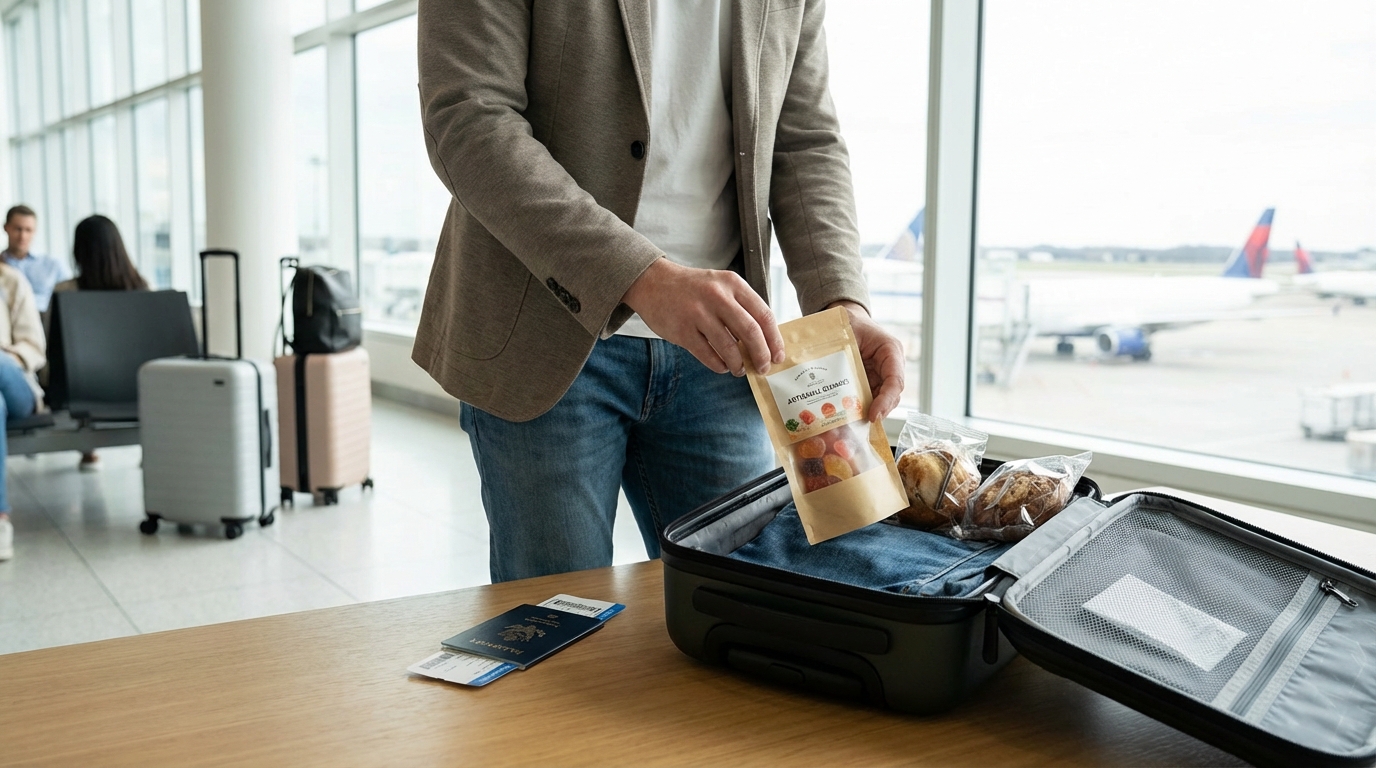
Quick Answer
Marijuana edibles are illegal to bring on a plane under federal law, even if you're flying between two states where cannabis is legal. The TSA follows federal law, not state law. Hemp-derived edibles with 0.3% THC or less are the legal exception.
Here's the direct answer: marijuana edibles are federally illegal on planes. It doesn't matter if you're flying from Colorado to California, where weed is legal in both states. Air travel is regulated by federal law, and marijuana remains a Schedule I controlled substance federally. That's the rule.
The Federal vs. State Law Problem
This is the core issue that confuses people. Your state might have fully legalized recreational marijuana. The dispensary where you bought those gummies is a licensed, tax-paying business. You're a legal customer. None of that matters at the airport.
The TSA is a federal agency. Airports are federal property. Airspace is federally regulated. When you walk into an airport with marijuana edibles, you're bringing a federally illegal substance onto federal property. The legality of cannabis in your state or your destination state is irrelevant to federal law.
This applies to:
- Recreational marijuana edibles -- Illegal federally, regardless of state law.
- Medical marijuana edibles -- Also illegal federally. Your medical card is a state document that carries no weight under federal law.
- Dispensary-purchased edibles -- Being purchased legally at a state-licensed dispensary doesn't change their federal status.
What the TSA Actually Does
Here's where reality gets nuanced. The TSA's official position is clear: their screening procedures are focused on security threats, not drugs. Directly from the TSA: "TSA security officers do not search for marijuana or other illegal drugs, but if any illegal substance is discovered during security screening, TSA will refer the matter to a law enforcement officer."
Let's unpack what that means in practice:
- TSA isn't looking for your edibles. They're looking for weapons, explosives, and items that threaten aircraft safety. Your bag of gummies isn't a security threat.
- If they find them, they're required to call the police. TSA officers can't just ignore illegal substances. They must refer the matter to local law enforcement.
- What happens next depends on where you are. Local police decide what to do. At LAX, where marijuana is legal in California, police might ask you to dispose of it or take it back to your car. At an airport in a state where it's illegal, you could face charges.
The practical reality is that many people fly with edibles and nothing happens. The TSA isn't going to open your bag of gummy bears and test them for THC. But "many people get away with it" is not the same as "it's allowed." You're taking a risk, and the consequences vary wildly depending on the airport.
The Legal Alternative: Hemp-Derived Edibles
There's a category of edibles that is genuinely legal to fly with: hemp-derived edibles containing 0.3% THC or less on a dry weight basis.
The Farm Bill legalized hemp and hemp-derived products at the federal level. This means:
- Hemp CBD gummies with 0.3% THC or less -- Legal to fly with.
- Delta-8 THC edibles derived from hemp -- Federally legal under current law, though some states ban them. Check laws at your destination.
- Hemp-derived THC products at or below 0.3% -- Legal at the federal level.
These products are explicitly allowed by the TSA. Keep them in original packaging with clear labeling showing the THC content and hemp derivation. This is the safe, legal way to fly with edibles.
What Happens If You Get Caught
If TSA discovers marijuana edibles during screening, here's the chain of events:
- TSA flags the item. An officer will pull your bag for secondary inspection.
- TSA calls local law enforcement. This is not optional -- it's their protocol.
- Police decide what to do. This is where outcomes diverge dramatically based on location.
In cannabis-legal states, the most common outcomes are:
- Police ask you to dispose of the edibles or leave them behind.
- Police let you go with a warning.
- Rarely, you might receive a citation.
In states where marijuana is illegal:
- You could be cited or arrested for possession.
- The quantity matters -- personal-use amounts are treated very differently from large quantities that suggest distribution.
- You'll almost certainly miss your flight.
At a minimum, getting caught means delays, stress, and having your edibles confiscated. At worst, you're facing criminal charges. The outcome is entirely dependent on local jurisdiction, and you have no control over which officer responds or how they handle it.
Specific Airport Approaches
Different airports in legal states handle marijuana differently:
- LAX (Los Angeles) -- Has publicly stated that local police will not arrest travelers for possessing marijuana within state legal limits. But the TSA will still flag it, and your edibles will likely be confiscated.
- DEN (Denver) -- Amnesty boxes are available before security for disposing of cannabis products. Police typically don't arrest for personal amounts but will confiscate.
- SEA (Seattle) -- Similar to LAX. Local police generally won't prosecute personal amounts, but TSA will still flag and refer.
- ORD (Chicago) -- Cannabis is legal in Illinois, but airport enforcement can vary.
Even in the most cannabis-friendly airports, you're still dealing with a federal checkpoint. The airport's local policy doesn't override federal law -- it just affects how local police respond to TSA's referral.
Edibles Look Like Regular Food
Let's address the elephant in the room. Marijuana gummies look exactly like regular gummies. A cannabis-infused chocolate bar looks like a regular chocolate bar. The TSA's X-ray machine can't detect THC. Their officers aren't trained to identify edibles by sight.
This is why many people fly with edibles without incident -- they simply look like food, and TSA isn't looking for drugs. But this doesn't make it legal, and it doesn't eliminate the risk. If your bag gets pulled for secondary screening for any reason (a water bottle you forgot, a battery pack, anything), and the officer notices dispensary packaging or recognizes the brand, you've got a problem.
Some people repackage edibles in regular candy bags to avoid detection. This is also illegal -- and arguably worse, since it shows intent to conceal. Don't do this.
Flying with Edibles Internationally
If flying with marijuana edibles domestically is risky, flying with them internationally is genuinely dangerous. Do not bring marijuana edibles on international flights.
- Customs and Border Protection (CBP) actively searches for drugs at international checkpoints. They're much more thorough than TSA.
- Many countries have severe penalties for drug importation. We're talking prison time, not a slap on the wrist.
- Even Canada, where marijuana is legal, prohibits bringing cannabis across the border in either direction. You can't fly from a legal U.S. state to Canada with edibles.
- Southeast Asian countries (Thailand, Singapore, Malaysia) have some of the harshest drug laws in the world. Bringing edibles into these countries could result in years of imprisonment.
This isn't an area for risk-taking. International drug smuggling charges -- even unintentional ones -- can upend your life.
Safer Alternatives
If you want to consume edibles at your destination, here are legal approaches:
- Buy at your destination. If you're traveling to a cannabis-legal state, buy edibles when you arrive. Dispensaries are everywhere in legal states.
- Fly with hemp-derived CBD edibles. If you're looking for relaxation or anxiety relief rather than a high, hemp CBD gummies are legal to fly with and widely available.
- Check legal Delta-8 availability. Delta-8 THC products derived from hemp are federally legal (for now) and available in many states. Some travelers use these as an alternative.
The Upcoming Rule Change
Keep an eye on evolving regulations. New restrictions are expected in late 2026 that would further limit hemp products, potentially outlawing hemp-derived edibles with more than 0.4 milligrams of THC per package. This could significantly narrow the range of legal hemp edibles you can fly with. The regulatory landscape is shifting, so check current rules before you travel.
The Bottom Line
Marijuana edibles are illegal to bring on a plane under federal law. The TSA isn't searching for them, but they're required to call law enforcement if they find them. Hemp-derived edibles with 0.3% THC or less are the legal exception and are explicitly allowed by the TSA. If you want marijuana edibles at your destination, buy them there. The legal risk of flying with dispensary products -- even between two legal states -- simply isn't worth it when you can purchase them legally on the other end.
Frequently Asked Questions
Can I bring edibles on a plane if weed is legal in my state?
No. Air travel is governed by federal law, and marijuana is federally illegal. Even flying between two legal states, bringing marijuana edibles through a TSA checkpoint violates federal law.
Will TSA search for edibles in my bag?
TSA does not specifically search for drugs or edibles. Their focus is on security threats. However, if they discover marijuana during routine screening, they are required to refer the matter to local law enforcement.
What happens if TSA finds my edibles?
TSA will call local law enforcement. What happens next depends on your location. In cannabis-legal states, police may ask you to dispose of them. In states where marijuana is illegal, you could face citations or arrest.
Are CBD gummies legal to bring on a plane?
Yes, if they're hemp-derived and contain 0.3% THC or less. These are federally legal and explicitly allowed by TSA. Keep them in original packaging with clear labeling.
Can I bring a medical marijuana card to fly with edibles?
A state medical marijuana card does not authorize you to bring marijuana products through federal security checkpoints. The TSA follows federal law, not state medical marijuana programs.
Written by Aviation Experts
Aviation Professionals
With decades of combined experience in the aviation industry, our team shares insider knowledge to make your travel experience smoother and less stressful.
Was this article helpful?