Can You Bring Baby Formula on a Plane?
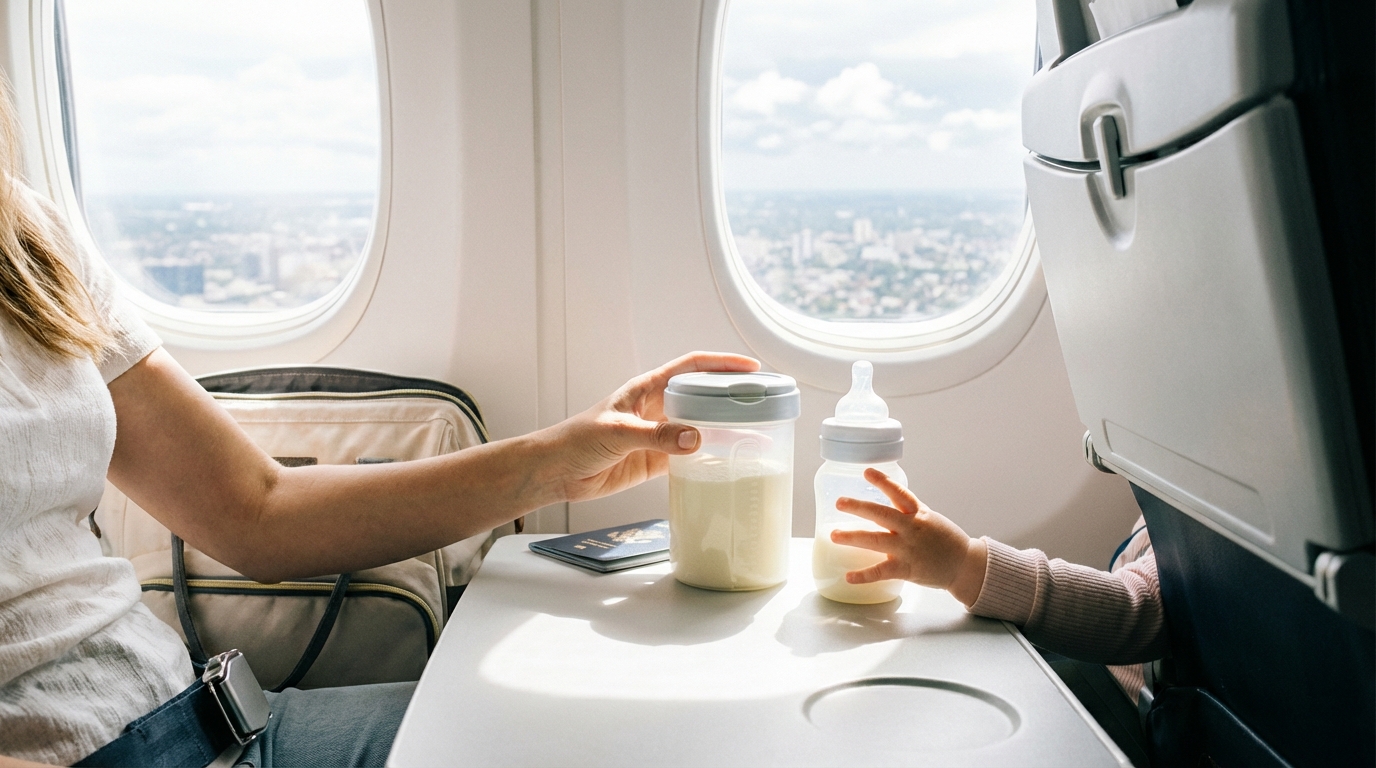
Quick Answer
Yes, baby formula is allowed on planes in quantities exceeding 3.4 ounces. It's exempt from the TSA 3-1-1 liquids rule. Powder, liquid, and pre-mixed formula are all permitted in carry-on bags — and your baby doesn't even need to be with you.
The Direct Answer
Yes, you can bring baby formula on a plane in your carry-on bag, and it's exempt from the 3-1-1 liquids rule. This means you can bring more than 3.4 ounces — enough for the whole flight and then some. TSA considers formula a medically necessary liquid, so it gets special treatment at security.
This applies to all types of formula: powder, liquid concentrate, and ready-to-feed. You can also bring breast milk, toddler drinks, and baby food in quantities exceeding the standard liquid limit. And here's a detail that surprises many parents: your baby doesn't need to be traveling with you to bring formula through security.
How Much Formula Can You Bring?
TSA doesn't set a specific upper limit on baby formula. Their guidance says "reasonable quantities" are permitted. In practice, this means you can bring enough for your trip without anyone giving you trouble.
What counts as reasonable? Enough to cover:
- Feedings during the flight
- Feedings during layovers
- A buffer in case of delays (and if you've flown with a baby, you know delays happen at the worst times)
- Some extra for the first day at your destination, if needed
Nobody's going to measure your formula or ask you to justify the quantity. Bring what you need and don't stress about it.
Powder vs. Liquid Formula
Powder formula has no liquid restrictions at all. You can pack as much as you want. However, if you're carrying more than 12 ounces of powder, TSA requires it to go in a separate bin for X-ray screening. The container may need to be opened for additional testing.
Liquid formula (ready-to-feed or pre-mixed) is exempt from the 3-1-1 rule but will be screened separately. TSA may test it using non-invasive methods — they'll never put anything into the liquid.
The TSA Screening Process
Here's exactly what to expect at the security checkpoint with formula:
Step 1: Declare it
Tell the TSA officer at the start of screening that you're carrying formula, breast milk, or baby food. Don't wait for them to find it. Declaring it upfront speeds everything up and puts the officer in the right mindset.
Step 2: Separate it
Remove formula containers from your carry-on bag and place them in a separate bin for X-ray screening. This goes for bottles, cartons, and any containers of liquid formula or breast milk.
Step 3: Additional screening
TSA may use additional screening methods on your formula:
- Bottle Liquid Scanner: A non-invasive device that tests sealed containers without opening them. Works best with clear, translucent bottles — not pouches or opaque bags
- Vapor testing: The officer may hold a test strip near the container opening
- Visual inspection: They may ask you to open the container
TSA will never add anything to your formula or require you to taste it. If you're uncomfortable with X-ray screening, you can request alternative screening — but be aware this typically involves a more thorough manual inspection and may take extra time.
What Else Can You Bring for Baby?
The formula exemption extends to a whole category of baby-related liquids and foods. All of these are allowed in quantities exceeding 3.4 ounces:
- Breast milk (fresh, frozen, or previously frozen)
- Baby food (purees, pouches, jars)
- Toddler drinks (juice, milk, electrolyte drinks for young children)
- Sterile water for mixing formula
- Baby cereal mixed with liquid
Cooling Accessories
You can also bring items to keep formula and breast milk cold:
- Ice packs
- Freezer packs
- Gel cooling packs
- Frozen items to keep formula chilled
These are allowed regardless of whether they're frozen, partially frozen, or fully thawed. They don't need to follow the 3-1-1 rule as long as they're accompanying formula or breast milk.
Packing Formula for the Flight
A little preparation goes a long way when traveling with formula:
For powder formula
- Pre-measure servings into individual containers or formula dispensers. This saves you from scooping powder on a turbulent plane
- Bring empty bottles and mix with water on the plane. Flight attendants will almost always provide warm water if you ask
- Pack a formula dispenser with pre-portioned servings — much easier than hauling the whole canister
- Keep the original container if you're bringing a lot. Having the manufacturer's label can help if TSA has questions about the powder
For liquid formula
- Use clear, translucent bottles when possible. TSA's Bottle Liquid Scanner works better with clear containers, which means faster screening
- Avoid pouches if you can. The scanner can't always read pouches, so they may require manual inspection, which takes longer
- Bring sealed, store-bought containers as backup. Unopened factory-sealed formula is the fastest to screen
- Pack more than you think you need. Flight delays happen. You don't want to be stuck on the tarmac with a hungry baby and no formula
Flying Without Your Baby
Here's something many parents don't realize: you don't need to have your baby with you to bring formula through security. TSA's policy is clear on this — the child doesn't need to be present.
This matters if you're:
- Flying ahead of your family and bringing supplies
- A caregiver transporting formula for someone else's baby
- Sending a family member with formula on a different flight
- Pumping breast milk on a work trip and flying it home
If a TSA officer questions why you have formula without a baby, calmly explain the situation. You're within your rights, and TSA's own website confirms this policy.
Warming Formula on the Plane
Most babies prefer warm formula, and there are a few ways to handle this in-flight:
- Ask the flight attendant for a cup of hot water. Place the bottle in the hot water for a few minutes to warm it. Most crews are happy to help
- Bring a portable bottle warmer. Battery-powered and USB bottle warmers are allowed in carry-on bags. They're slow but better than nothing
- Use room-temperature formula. If your baby will take it, this is the easiest option. Many babies don't actually mind room-temp formula, especially if they're used to it
International Flights
Formula exemptions apply at U.S. airports under TSA jurisdiction. When flying internationally, you'll encounter similar exemptions in most countries — baby formula is treated as a medically necessary item virtually everywhere. However, a few things to keep in mind:
- EU airports allow baby milk and food in reasonable quantities, but you may be asked to taste the liquid
- Some countries have stricter powder rules. Australia, for instance, has tight restrictions on powders in carry-on bags
- Formula brands vary globally. If your baby needs a specific brand, bring enough for the whole trip rather than counting on finding it abroad
Common Mistakes Parents Make
- Not declaring formula at security. This leads to a bag search when it shows up on the X-ray unexpectedly
- Packing formula deep in the diaper bag. Keep it accessible so you can pull it out quickly at the checkpoint
- Bringing just enough. Always overpack formula. A two-hour delay with a screaming hungry baby is nobody's idea of fun
- Using opaque containers. Clear bottles screen faster. Save yourself five minutes at TSA
- Forgetting water for mixing. You can bring sterile water for formula or ask for water after security, but don't assume the plane will have it ready when you need it
The Bottom Line
Flying with baby formula is one of the most parent-friendly TSA policies out there. You can bring as much as you reasonably need, in any form — powder, liquid, or ready-to-feed. Just declare it at the checkpoint, keep it accessible for screening, and pack more than you think you'll use. The TSA officers screening your formula have seen it thousands of times. It's routine for them, and it should be routine for you too.
Frequently Asked Questions
Is baby formula exempt from the TSA 3-1-1 liquids rule?
Yes. Baby formula, breast milk, and baby food are all exempt from the 3-1-1 rule. You can bring quantities exceeding 3.4 ounces in your carry-on bag. Just declare it at the security checkpoint and separate it for screening.
Do I need to have my baby with me to bring formula through TSA?
No. TSA does not require your child to be present or traveling with you to bring formula, breast milk, or related supplies through security. You're allowed to carry these items regardless.
Will TSA open or test my baby's formula?
TSA may test formula using non-invasive methods like a Bottle Liquid Scanner or vapor test strips. They will never put anything into the formula. If you prefer your formula not be X-rayed or opened, you can request alternative screening methods.
Can I bring ice packs to keep formula cold on a plane?
Yes. Ice packs, freezer packs, and gel cooling packs are allowed in carry-on bags when accompanying formula or breast milk. They're permitted regardless of whether they're frozen, partially frozen, or fully thawed.
How much powder formula can I bring on a plane?
There's no quantity limit for powder formula. However, if you're carrying more than 12 ounces of powder, TSA requires it to go in a separate bin for X-ray screening, and the container may need to be opened for additional testing.
Written by Aviation Experts
Aviation Professionals
With decades of combined experience in the aviation industry, our team shares insider knowledge to make your travel experience smoother and less stressful.
Was this article helpful?