Can You Bring Alcohol on a Plane?
Quick Answer
Yes, you can bring alcohol on a plane -- but the rules depend on where you pack it, the alcohol content, and whether you plan to drink it. Here's the complete breakdown of TSA and FAA regulations.
Yes, you can bring alcohol on a plane. But the rules are more nuanced than you might expect. There are different limits for carry-on vs. checked bags, restrictions based on alcohol percentage, and a federal law that says you can't drink your own booze onboard. Let's break it all down.
Alcohol in Your Carry-On
Alcohol in carry-on bags follows the same 3-1-1 liquid rule as everything else:
- Containers must be 3.4 ounces (100 ml) or smaller
- All containers must fit in a single quart-sized clear plastic bag
- One bag per passenger
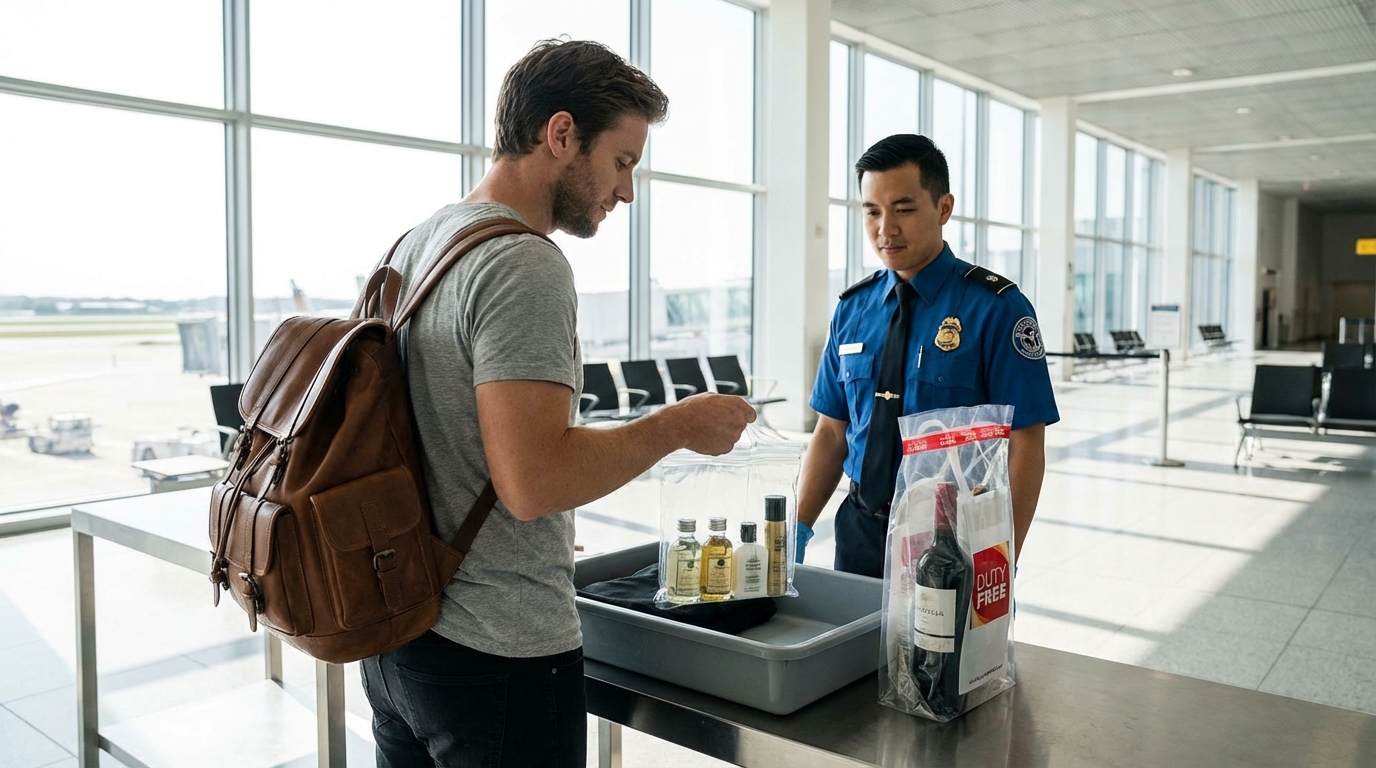
This means those little 50 ml (1.7 oz) mini bottles -- sometimes called "nips" or "airplane bottles" -- are carry-on legal, as long as they fit in your quart bag with your other liquids.
A standard quart bag can typically hold around 4 to 6 mini bottles alongside your other toiletries. But remember, they're sharing space with your toothpaste, hand sanitizer, and whatever else you've got in there. Something has to give if you want to max out the mini bottles.
There's no restriction on alcohol content for carry-on mini bottles. Whether it's beer, wine, or 80-proof whiskey, the 3.4-ounce rule is the only limit that matters for getting through security.
Alcohol in Checked Bags
Checked luggage is where you can bring full-sized bottles. But the rules change based on the alcohol content, and the TSA and FAA have slightly different jurisdictions here -- TSA handles what goes through the checkpoint, while the FAA governs what can fly in the aircraft.
Under 24% ABV (48 Proof)
Beer, wine, most sake, hard cider, and similar low-proof beverages have no quantity limit in checked bags. You could technically fill your entire suitcase with wine bottles (though your luggage weight limit would stop you first).
This is great news if you're bringing wine home from Napa or beer from a brewery tour. As long as it's under 24% ABV, pack as much as your suitcase can handle.
24% to 70% ABV (48 to 140 Proof)
This covers most spirits: vodka, whiskey, rum, tequila, gin, and most liqueurs. You're limited to 5 liters (about 1.3 gallons) per passenger in checked bags. The bottles must be in unopened retail packaging.
Five liters is roughly:
- 6-7 standard 750 ml bottles, or
- 3-4 one-liter bottles, or
- About a case and a half of wine (though wine is under 24%, so it's actually unlimited)
The "unopened retail packaging" requirement means the original sealed bottle from the store. You can't pour whiskey into a plastic water bottle and toss it in your suitcase. Well, you can, but it violates the rule.
Over 70% ABV (140 Proof)
Banned entirely. No carry-on, no checked bags. This includes high-proof spirits like Everclear (190 proof), Bacardi 151 (discontinued but still floating around), some overproof rums, and certain cask-strength whiskeys. If it's over 70% alcohol by volume, it can't fly. This is a fire safety regulation -- extremely high-proof alcohol is essentially flammable.
Before packing a bottle, check the label. If the proof is higher than 140 (or the ABV is over 70%), leave it behind or ship it separately via ground transport.
You Can't Drink Your Own Alcohol on the Plane
This is the rule most people don't know about -- or choose to ignore. Federal Aviation Administration (FAA) regulation 14 CFR 121.575 states that no person may drink alcohol aboard an aircraft unless it has been served by the air carrier.
In plain English: you can't crack open your own mini bottles on the plane. Even though TSA let you bring them through security, the FAA says the flight crew has to serve you any alcohol you drink onboard.
Why does this rule exist? Airlines need to monitor passenger alcohol consumption to prevent intoxication-related incidents. Flight attendants are trained to cut off passengers who've had too much. When passengers sneak their own drinks, the crew loses the ability to monitor intake, and things can escalate quickly at 35,000 feet.
What Happens If You Get Caught?
The consequences are real and have gotten more serious in recent years:
- Fines from $500 to over $40,000 depending on the severity and whether unruly behavior resulted
- Potential arrest if you become disruptive or refuse crew instructions
- Airline bans -- some airlines will permanently ban passengers who violate alcohol rules
- Diversion of the aircraft in extreme cases, and you could be responsible for the cost (which can run into six figures)
The FAA has levied fines of $9,000+ against passengers caught drinking their own alcohol, especially when it led to unruly behavior. In one well-publicized case, a passenger who ordered a mixer from the flight attendant and then poured in their own vodka was fined thousands. It's not worth the risk.
Duty-Free Alcohol
Bought a bottle of bourbon at the duty-free shop? Here's how that works:
- Domestic flights: If you buy alcohol at a duty-free shop after clearing security, you can bring it on the plane in its sealed duty-free bag. But you still can't drink it onboard.
- International connections: If you have a connecting flight in the U.S. and need to re-clear security, your duty-free alcohol may need to meet the 3.4-ounce rule for carry-on. Many duty-free stores provide sealed, tamper-evident bags (STEBs) that TSA accepts -- but not all airports or TSA checkpoints honor this. Check before you buy.
The safest move: pack duty-free alcohol in your checked bag if you have a connection that requires re-screening. If you don't have a checked bag, buy duty-free on your final leg only.
Packing Alcohol in Checked Bags
Glass bottles and baggage handlers don't always get along. Here's how to protect your bottles and your clothes:
- Use a wine shipping box with foam inserts -- these are specifically designed for travel and can often be purchased at wine shops
- Wrap each bottle in clothing or bubble wrap. A rolled-up sweater around a bottle works well.
- Place bottles in the center of your suitcase surrounded by soft items. Never put bottles near the edges or corners of your bag.
- Use a plastic bag around each bottle in case of breakage -- you don't want whiskey-soaked clothes. A gallon Ziploc works perfectly.
- Consider a padded wine travel bag that fits inside your suitcase. Companies like VinGardeValise make suitcases specifically designed for transporting wine.
- Seal the caps. Wrap the neck and cap area with a few rounds of tape. Pressure changes during flight can cause poorly sealed bottles to leak.
Also remember: checked bags have a weight limit (usually 50 pounds for domestic U.S. flights). Bottles are heavy. A full 750 ml bottle of wine weighs about 2.5 to 3 pounds with the glass. Six bottles could eat up 18 pounds of your allowance and potentially push you into overweight bag fees.
Airline-Specific Rules
Airlines can set their own alcohol policies on top of TSA and FAA rules. Some things that vary by airline:
- Serving policies: Some airlines don't serve alcohol at all, or only serve it in certain cabin classes. Several budget carriers have stopped serving alcohol entirely on short-haul flights.
- Purchase requirements: Many domestic airlines now charge for alcoholic drinks in economy. Prices typically range from $7 to $12 per drink.
- Minimum age: It's 21 in the U.S., but on international carriers, it may be 18.
- Cut-off policies: Flight crews can refuse to serve alcohol to any passenger at any time, and they don't owe you an explanation.
- Complimentary alcohol: Most U.S. carriers still offer free alcohol in first and business class. International carriers frequently include it in all cabins on long-haul flights.
Check your airline's website for their specific alcohol policies before you fly. Getting on a five-hour flight expecting free drinks only to discover it's $9 a beer is a rude surprise.
International Customs Limits
If you're flying internationally with alcohol, you'll need to clear customs at your destination. Most countries limit how much alcohol you can bring in duty-free:
- United States: Returning residents can bring 1 liter duty-free (you can bring more, but you'll pay duty tax -- which is usually modest for personal quantities)
- European Union: 1 liter of spirits or 4 liters of wine duty-free from non-EU countries
- Canada: 1.14 liters of spirits, 1.5 liters of wine, or 8.5 liters of beer
- Australia: 2.25 liters of alcohol total
- Japan: 3 bottles of 760 ml each (about 2.28 liters total)
You can bring more than these amounts in most cases -- you'll just need to declare it and pay the applicable duty tax. Failing to declare alcohol at customs and getting caught can result in fines and confiscation, so be honest.
Practical Tips
- Don't pre-game too hard. Airlines can and do refuse to board passengers who appear intoxicated. Gate agents are watching, and they have every right to deny you boarding if you seem drunk.
- Hydrate. Cabin air is extremely dry (humidity levels drop to around 10-20%), and alcohol dehydrates you further. Altitude also amplifies the effects of alcohol, so you'll feel drinks more intensely at cruising altitude. One drink in the air can feel like two on the ground.
- Know your airline's drink policy before you fly. Some budget carriers charge $7-12 per drink; others include them free in premium cabins.
- If you're bringing wine home from a trip, consider shipping it instead. Wine shipping services are often cheaper and safer than checking fragile bottles, and you won't risk a broken bottle ruining your luggage.
- Some Muslim-majority countries prohibit alcohol imports entirely. Research your destination's laws before packing any alcohol, even in checked luggage.
Frequently Asked Questions
Can I bring mini bottles of alcohol on a plane?
Yes. Mini bottles (50 ml / 1.7 oz) are under the 3.4-ounce TSA limit and can go in your carry-on as long as they fit in your quart-sized liquids bag. However, you cannot drink them on the plane -- FAA rules require all alcohol consumed onboard to be served by the airline.
Can I pack a bottle of wine in my checked bag?
Yes. Wine is under 24% ABV, so there's no TSA-imposed quantity limit for checked bags. Wrap bottles well to prevent breakage and watch your luggage weight limit.
Can I drink my own alcohol on the plane?
No. FAA regulation 14 CFR 121.575 prohibits passengers from drinking alcohol on a plane unless it's been served by the airline. Violating this rule can result in fines ranging from $500 to over $40,000.
How much alcohol can I put in a checked bag?
It depends on the alcohol content. Beer and wine (under 24% ABV) have no quantity limit. Spirits between 24-70% ABV are limited to 5 liters per passenger in unopened retail packaging. Anything over 70% ABV is banned entirely.
Can I bring duty-free alcohol on a connecting flight?
It depends on whether you need to re-clear security. If your duty-free bottle is over 3.4 ounces and you need to go through TSA again at a connection, it may be confiscated unless it's in a sealed, tamper-evident bag (STEB) that the checkpoint accepts. The safest option is to pack duty-free purchases in checked luggage for connections.
Written by Aviation Experts
Aviation Professionals
With decades of combined experience in the aviation industry, our team shares insider knowledge to make your travel experience smoother and less stressful.
Was this article helpful?