Can You Bring a Disposable Camera on a Plane?
Quick Answer
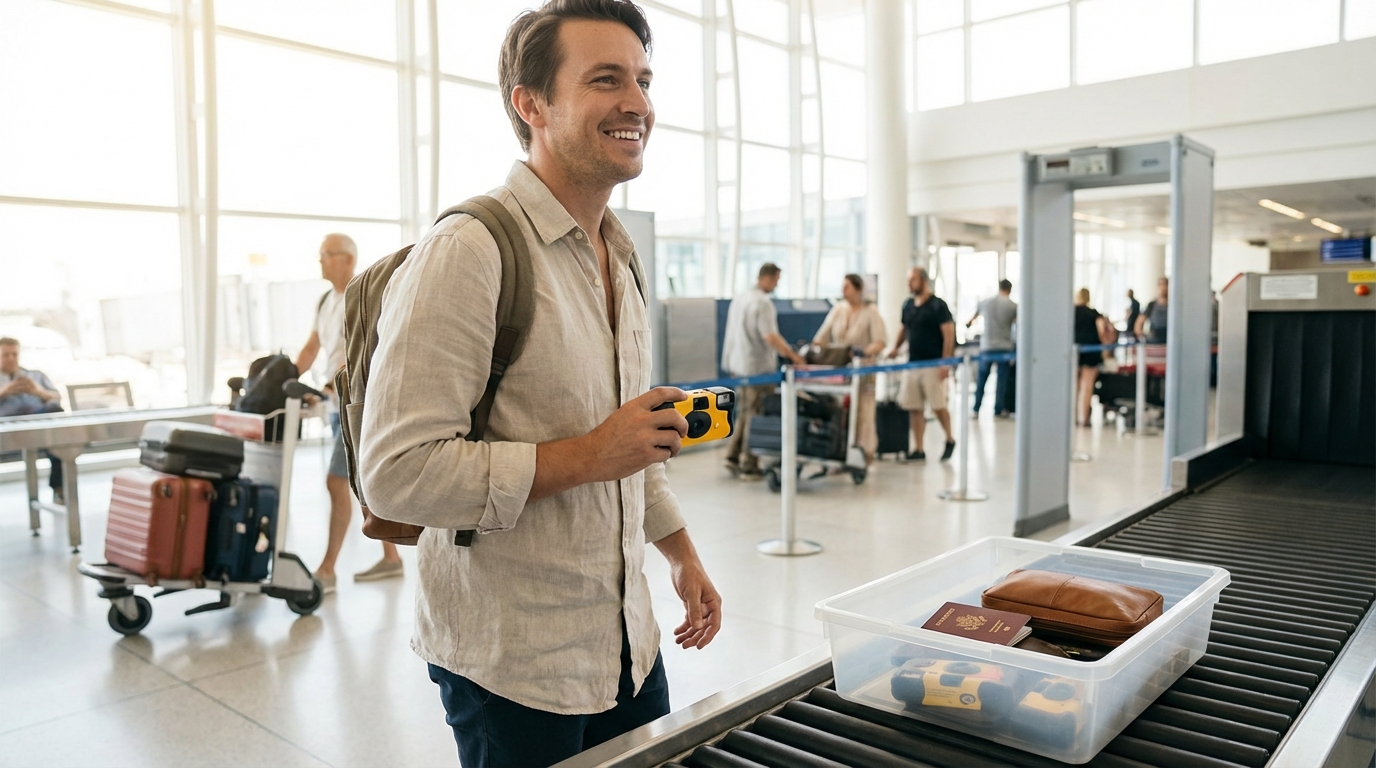
Yes, you can bring a disposable camera on a plane in both carry-on and checked bags. However, you should always pack it in your carry-on and request a hand inspection to protect your film from X-ray damage.
The Short Answer
Yes, disposable cameras are allowed on planes in both carry-on and checked bags. But here's the thing most people don't realize: where you pack it matters a lot. Always put your disposable camera in your carry-on bag, and ask TSA for a hand inspection if the photos on that roll matter to you.
The reason is simple. Airport X-ray machines can fog your film, especially the heavy-duty scanners used for checked luggage. A single pass through a carry-on scanner probably won't ruin standard film, but why risk it?
Why Carry-On Is the Only Smart Choice
There are two completely different X-ray systems at airports, and understanding this will save your photos.
Carry-on bag scanners use a relatively low dose of X-ray radiation. For film rated ISO 800 or below (which covers most disposable cameras — they're typically loaded with ISO 400 film), a single pass is usually fine. You might see slight fogging after multiple passes, but one trip through won't destroy your shots.
Checked baggage scanners are a totally different beast. They use CT scanning technology that blasts your luggage with significantly higher radiation levels. This will damage or destroy undeveloped film. It doesn't matter what speed your film is — checked bag scanners are powerful enough to ruin it in a single pass.
So the rule is straightforward: never put a disposable camera in your checked bag. Technically TSA allows it, but your photos won't survive the scanner.
How to Request a Hand Inspection
The TSA officially allows you to request a hand inspection for undeveloped film and cameras that contain undeveloped film. Here's exactly how to do it:
- Take your disposable camera out of your bag before you place it on the conveyor belt
- Tell the TSA officer you have undeveloped film and would like a hand inspection
- Place the camera in a separate bin or hand it directly to the officer
- Be patient. The officer will visually inspect the camera and may swab it for explosive residue testing
The whole process takes about a minute. Most TSA agents are familiar with this request and handle it routinely. You're not being difficult or holding up the line — this is a standard, documented TSA procedure.
One thing to keep in mind: while TSA policy allows hand inspection, the final decision always rests with the individual officer at the checkpoint. In practice, it's extremely rare for a hand inspection to be refused, but it can happen.
What About the New CT Scanners for Carry-On Bags?
Here's something that's caught a lot of travelers off guard. TSA has been rolling out new CT (computed tomography) scanners to replace traditional X-ray machines at carry-on checkpoints. These are the same technology used for checked baggage, just at carry-on screening stations.
These CT scanners are more powerful than the old carry-on X-ray machines and can absolutely damage film. If you're going through an airport that uses CT scanners at carry-on checkpoints, requesting a hand inspection isn't just recommended — it's essential.
You can't always tell which type of scanner an airport uses until you get to the checkpoint. The CT scanners are usually larger machines, but the safest approach is to always request hand inspection regardless of what scanner you see.
Multiple Flights Multiply the Risk
Even with traditional carry-on X-ray scanners, the radiation damage is cumulative. Each pass through a scanner adds more fog to your film. If you're taking a trip with connections — say, flying from New York to LA with a layover in Dallas — that's potentially three separate security screenings.
For a single direct flight, your ISO 400 disposable camera will probably survive a traditional X-ray just fine. But for multi-leg trips, the hand inspection request becomes much more important. Plan ahead and factor in a few extra minutes at each security checkpoint.
What Kind of Film Is in a Disposable Camera?
Most disposable cameras from brands like Fujifilm and Kodak come loaded with ISO 400 color negative film. This is considered medium-speed film and is moderately sensitive to X-ray damage.
Here's a quick breakdown of film sensitivity:
- ISO 200 and below: Least sensitive to X-rays. Can usually survive a few passes through carry-on scanners
- ISO 400: Moderate sensitivity. This is what's in most disposable cameras. One pass through a traditional carry-on scanner is generally okay
- ISO 800 and above: Highly sensitive. TSA specifically recommends hand inspection for film rated 800 or higher
Even though ISO 400 is relatively forgiving, there's no reason to gamble. Hand inspection is free, fast, and guaranteed to protect your film.
Disposable Cameras with Flash
Many disposable cameras have a built-in flash unit that uses a small battery. This won't cause any issues at security. TSA treats disposable cameras the same whether or not they have a flash — the battery is tiny and poses no safety concern.
You don't need to remove any batteries, and the flash capacitor won't trigger any alarms. Just keep the camera in your carry-on and you're good.
How Many Disposable Cameras Can You Bring?
There's no limit on the number of disposable cameras you can bring in your carry-on. If you're headed to a wedding and packed six cameras for the tables, that's fine. If you're a film photography enthusiast with a dozen, go for it.
The only practical consideration is the hand inspection. If you've got a pile of cameras, the TSA officer will need to inspect each one. It's still a quick process, but budget a couple of extra minutes.
International Travel Tips
Different countries have different scanner technology, and not every airport offers hand inspection for film. Here's what you should know:
- Europe: Many European airports have switched to CT scanners for carry-on screening. Hand inspection policies vary by country, but most will accommodate the request
- Asia: Security screening varies widely. Japan and South Korea generally accommodate hand inspection requests. Some airports in Southeast Asia may not be as familiar with the request
- Australia: Australian airport security uses CT scanners and film damage has been reported. Always request hand inspection
If you're traveling internationally with disposable cameras, the safest approach is to shoot your film before the return trip and have it developed at your destination. That way, you eliminate all scanner risk for the flight home.
What If Your Film Gets X-Rayed?
If your disposable camera went through an X-ray machine (or you forgot to request hand inspection), don't panic. The damage depends on several factors:
- What type of scanner was used (traditional X-ray vs. CT)
- How many times it was scanned
- The ISO speed of the film
For a single pass through a traditional carry-on X-ray with ISO 400 film, your photos are almost certainly fine. You might notice very slight fogging in solid-colored areas if you're really looking for it, but it generally won't ruin your pictures.
If it went through a CT scanner or checked bag scanner, you may see noticeable fogging, color shifts, or streaks across your images. The only way to know for sure is to develop the film and see what you get.
Packing Tips
A few practical tips for flying with disposable cameras:
- Keep them in your personal item (backpack, purse) rather than your overhead carry-on. Easier to pull out at security
- Put all your cameras in a clear plastic bag. This makes the hand inspection faster and signals to TSA agents that you've got film
- Don't pack them near metal objects. This can trigger additional screening of your bag
- Bring fresh, unused cameras in their original packaging if possible. Unwrapped cameras may get slightly more scrutiny
- Protect them from heat. Don't leave your bag in direct sunlight or a hot car before your flight. Heat damages film too
Developed Film and Printed Photos
Already shot and developed your disposable camera film? Printed photographs and developed negatives are completely safe to X-ray. The development process fixes the image permanently, so no scanner of any type can damage finished photos. Pack them wherever you want.
Frequently Asked Questions
Can disposable cameras go through airport X-ray machines?
They can, but it's not ideal. Traditional carry-on X-ray machines probably won't damage ISO 400 film in a single pass, but CT scanners and checked bag scanners can fog or ruin your film. Always request a hand inspection to be safe.
Can you put a disposable camera in checked luggage?
Technically yes — TSA allows it. But don't. Checked baggage scanners use high-powered CT technology that will damage or destroy undeveloped film. Always pack disposable cameras in your carry-on.
How do you request a hand inspection for film at TSA?
Remove your disposable camera from your bag before it goes on the conveyor belt, tell the TSA officer you have undeveloped film, and ask for a hand inspection. They'll visually inspect it and possibly swab it. The whole process takes about a minute.
How many disposable cameras can you bring on a plane?
There's no TSA limit on the number of disposable cameras you can bring in your carry-on. Bring as many as you need. Just allow a bit of extra time at security if you're requesting hand inspection for multiple cameras.
Will airport security ruin my disposable camera photos?
It depends on the scanner. A single pass through a traditional carry-on X-ray with ISO 400 film is usually fine. CT scanners and checked bag scanners pose a real risk. Request a hand inspection to eliminate the risk entirely.
Written by Aviation Experts
Aviation Professionals
With decades of combined experience in the aviation industry, our team shares insider knowledge to make your travel experience smoother and less stressful.
Was this article helpful?