Can A Plane Leave Early Without You?
Quick Answer
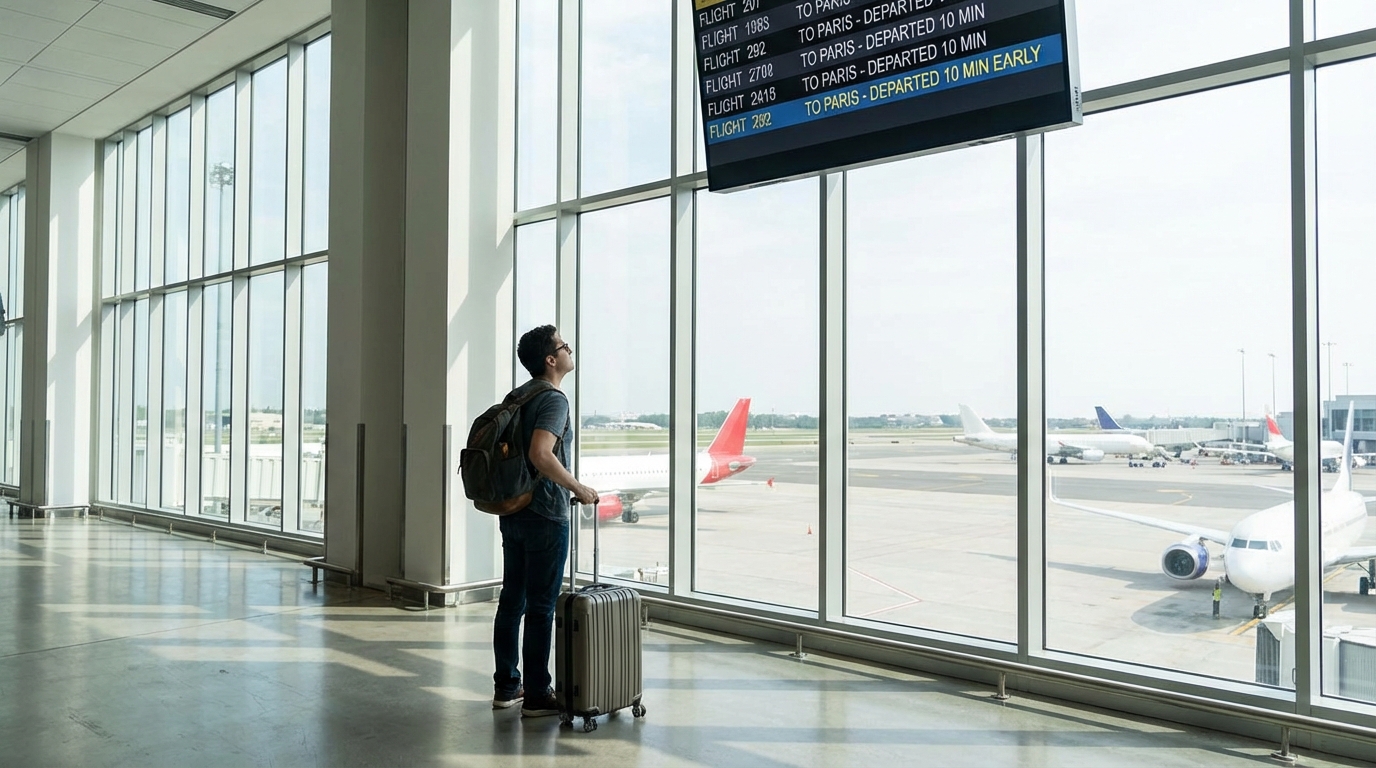
Short answer: yes, a plane can absolutely leave before its scheduled departure time — and it happens more often than you'd think. Here's what you need to know about boarding cutoffs, early departures, and your rights.
The Short Answer: Yes, It Can
There's no federal rule in the United States that forces an airline to wait for you. If everyone who's checked in and at the gate has boarded, the crew can close the doors and push back early. No law says they have to sit there waiting for the clock to hit the scheduled departure time.
This catches a lot of travelers off guard. You assume you have until the departure time printed on your boarding pass. You don't. You have until the boarding cutoff time, which is significantly earlier — and once that window closes, you're out of luck even if the plane is still sitting at the gate.
Boarding Cutoff Times by Airline
Every major airline has a firm deadline for when you need to be at the gate, physically present, ready to board. Miss it and your seat can be given away, even if you've checked in and have a boarding pass.
Here are the standard cutoffs for domestic flights:
- American Airlines — boarding ends 15 minutes before departure
- Delta — gate closes 15 minutes before departure
- United — you must be on the aircraft 15 minutes before departure
- Southwest — gate closes 10 minutes before departure
- Alaska Airlines — check-in closes 40 minutes before departure; boarding cutoff 15 minutes
- JetBlue — gate closes 15 minutes before departure
For international flights, these windows are much wider:
- Delta — gate closes 45 minutes before departure for international flights
- Most carriers — 30 to 60 minutes before departure for international routes
- Check-in cutoffs — often 60 to 90 minutes before departure for international flights
These aren't suggestions. They're hard cutoffs. The gate agent will close that door and won't reopen it because you showed up two minutes late.
Why Planes Leave Early
Airlines have financial incentives to leave early when they can. Every minute at the gate costs money — in fuel, crew time, and gate fees. If everyone who checked in has boarded and there's a clear slot for departure, the captain and crew will take it.
Here's what typically happens:
- All checked-in passengers are on board
- No-show passengers have been accounted for
- The crew sees an opening in the departure queue
- Air traffic control grants an early slot
- The doors close and the plane pushes back
This is especially common during bad weather windows. If there's a storm approaching and the crew can get out 8 minutes early, they'll do it. Waiting means potentially sitting on the tarmac for hours.
What About Connecting Passengers?
Here's where it gets frustrating. If you're on a connecting flight and your first leg is delayed, there's no rule requiring your second flight to wait for you. Airlines sometimes hold flights for large groups of connecting passengers, but it's entirely at their discretion.
The gate agent on your connecting flight doesn't know — or particularly care — that you're sprinting through Terminal C. If everyone else is boarded and the departure window is open, they'll close the door.
What you should do if your first flight is delayed and you have a tight connection:
- Tell the flight attendant on your first flight — they can sometimes radio ahead
- Check the airline app for your connection's status — it might also be delayed
- Sit near the front of the plane to deplane faster
- Know your rebooking options before you land
What Happens If You're Left Behind
If a plane leaves early — or on time — and you're not on it, what happens next depends on why you missed it.
If the Airline Changed the Schedule
Under DOT rules, a "significant change" to your flight triggers refund rights. If an airline moves your departure 3 or more hours earlier for a domestic flight (or 6 hours for international), that counts as a significant change. You're entitled to a full refund if you choose not to travel.
If You Were Involuntarily Denied Boarding
If you were at the gate on time and the airline bumped you (usually due to overbooking), you have real rights. DOT rules require compensation:
- 1-2 hour delay to destination — 200% of your one-way fare, up to $775
- Over 2 hours (domestic) or 4 hours (international) — 400% of your one-way fare, up to $1,550
The airline must also offer you the choice of a full refund or rebooking on the next available flight.
If You Were Simply Late
If you showed up after the boarding cutoff? That's on you. The airline will typically rebook you on the next available flight at no charge if it's the same day. But they don't owe you meals, hotel, or compensation. Budget airlines may not rebook you at all without a fee.
The 10-Minute Rule (and Why It Doesn't Exist)
There's a persistent myth that planes must wait at least 10 minutes past the scheduled departure time. This isn't real. There's no such regulation from the FAA or DOT. Airlines set their own policies, and those policies favor leaving as soon as the plane is ready.
The closest thing to a real rule is the DOT's tarmac delay regulation, which caps how long a plane can sit on the tarmac after departure — 3 hours for domestic, 4 hours for international. But that's about keeping you stuck on a plane, not about waiting for late passengers.
How to Make Sure You're Not Left Behind
The fix is simple: don't cut it close.
- Be at the gate 30 minutes before departure for domestic flights — not 15. Give yourself margin.
- 45-60 minutes for international flights — especially at large airports with long terminal walks
- Book longer layovers — 90 minutes minimum for domestic connections, 2-3 hours for international
- Check your flight status constantly — schedule changes and gate changes happen all the time
- Enable airline app notifications — you'll get real-time updates on gate changes and early boarding calls
- Don't wander far from your gate — that airport bar three terminals over isn't worth the risk
International Flights Are Even Stricter
International flights have earlier cutoffs for a reason — immigration manifests, security protocols, and customs documentation all need to be finalized well before departure. If you miss the cutoff on an international flight, rebooking is often much harder because flights may only operate once daily.
Some international airports also have additional security screening at the gate, which can add 15-20 minutes. Factor this into your timing, especially at airports like London Heathrow, Tel Aviv Ben Gurion, or any airport with gate-side security checks.
What About Checked Bags?
Here's a related concern: if you check a bag but don't board, most airlines will pull your bag from the aircraft before departure. This is a security regulation — unaccompanied bags aren't allowed on passenger flights. So your bag being in the hold won't keep the plane from leaving without you. It just means they'll spend a few minutes finding and removing your bag, which can actually delay the flight further.
This is another reason airlines are strict about cutoff times. Pulling bags takes time and disrupts the loading process.
Bottom Line
Planes can and do leave early. There's no law protecting you if you're late to the gate. The boarding cutoff time — not the departure time — is your real deadline. Build in extra time, monitor your flight status, and don't assume the airline will wait. Because they won't.
Frequently Asked Questions
Can a plane leave before the scheduled departure time?
Yes. There's no federal rule requiring planes to wait until the scheduled departure time. If all boarded passengers are accounted for and the crew has clearance, the plane can push back early. This happens regularly, especially during weather windows or when air traffic control offers an early departure slot.
How early should I be at the gate to avoid being left behind?
Be at the gate at least 30 minutes before departure for domestic flights and 45-60 minutes for international flights. The official boarding cutoff is typically 10-15 minutes before departure for domestic and 30-60 minutes for international, but arriving earlier gives you a safety buffer.
Will the airline wait for me if my connecting flight was delayed?
There's no guarantee. Airlines sometimes hold departures for large groups of connecting passengers, but it's entirely at their discretion. No regulation requires them to wait. If your connection is tight, tell the flight attendant on your first flight so they can radio ahead.
What compensation do I get if I'm bumped from a flight?
If you were at the gate on time and involuntarily denied boarding (usually due to overbooking), the airline must compensate you. For delays of 1-2 hours, you'll receive 200% of your one-way fare up to $775. For delays over 2 hours domestically, it's 400% up to $1,550. You also get the choice of a refund or rebooking.
Is there a rule that planes must wait 10 minutes past departure time?
No. This is a common myth. There's no FAA or DOT regulation requiring planes to wait any specific amount of time past their scheduled departure. Airlines set their own boarding cutoff times, and once the doors close, the plane can depart whenever it has clearance.
Written by Aviation Experts
Aviation Professionals
With decades of combined experience in the aviation industry, our team shares insider knowledge to make your travel experience smoother and less stressful.
Was this article helpful?