How to Use an Airplane Bathroom
Quick Answer
Airplane bathrooms are tiny, loud, and a little confusing the first time. Here's exactly how everything works, when to go, and what to know before your first flight.
It's Smaller Than You Think
Let's set expectations. An airplane lavatory is roughly 3 feet by 3 feet. You'll barely be able to turn around. There's a toilet, a tiny sink, a mirror, and not much else. The door folds inward or slides, and once you're inside, you're in close quarters with every surface.
Don't let the size intimidate you. Hundreds of millions of people use these things every year. Once you know how the lock, flush, and sink work, it's straightforward.
How to Tell If It's Occupied
Look at the door. Every airplane lavatory has a small indicator that says either "Vacant" (usually green) or "Occupied" (usually red). This indicator is linked to the door lock, so when someone locks the door from inside, it automatically flips to occupied.
Some planes also have small lights above or near the lavatory. Green light means it's available. Red means someone's in there. If you see a line, just stand nearby and wait for the indicator to change. Don't knock unless you've been waiting an unusually long time.
How the Door Lock Works
This trips up a lot of first-timers. Airplane bathroom doors don't lock like regular doors.
Once you're inside, you'll see a latch or sliding bolt on the door. Slide it to the "LOCKED" position. This does two things: it locks the door, and it turns on the light inside the bathroom. If you don't engage the lock, the light may not come on, and the "Vacant" sign stays visible, meaning someone might try to open the door.
Always lock the door. It controls both the light and the privacy indicator.
How the Toilet Works
Airplane toilets don't use water like your home toilet. They use a vacuum system. When you press the flush button, a valve opens and powerful suction pulls everything down through a 2-inch pipe into a holding tank below the aircraft.
That's what creates the loud whooshing sound. It's startling the first time, but it's completely normal. The flush uses only about half a gallon of liquid, compared to 1.6 gallons in a home toilet. It's extremely efficient.
The flush button is usually a large button or lever on the wall behind or beside the toilet. On some newer aircraft, it's a button on top of the toilet. Look for the word "FLUSH" or a symbol. Press it once, firmly. One flush is all you need. The vacuum does the rest.
A few things to keep in mind:
- Don't flush with the lid up while sitting. The suction is strong. Stand up first, then flush. The vacuum won't hurt you, but the sensation is unpleasant.
- Only flush toilet paper. No paper towels, no wipes, no feminine hygiene products (unless the sign says otherwise). These clog the narrow vacuum pipes and can disable the lavatory for the rest of the flight.
- The toilet works at all times, whether the plane is on the ground or at cruising altitude. You can use it before takeoff (once you've boarded) and after landing (before the door opens).
How the Sink Works
The faucet in an airplane bathroom isn't intuitive if you've never seen one before. Most airplane sinks use a spring-loaded push button or lever. You press or push it, and water flows for a few seconds, then stops automatically. You may need to press it several times while washing your hands.
Some newer planes have sensor-activated faucets that work like the touchless ones in restaurants. Just wave your hands under the faucet.
The water is safe for washing but isn't meant for drinking. Use it for hand washing only.
Soap is usually in a dispenser on the wall, and paper towels are in a small holder. Used towels go in the trash flap, which is a small door built into the counter or wall. Push the flap and drop the towel in.
When to Use the Bathroom
Timing matters more than you'd think. Here are the best and worst times:
Best Times
- Right after boarding, before takeoff. The lavatories were just cleaned. No line. No turbulence. This is the cleanest the bathroom will be for the entire flight.
- Right after the seatbelt sign turns off after takeoff, before the drink service starts. Once the cart comes out, the aisle is blocked and getting to the bathroom becomes a logistical challenge.
- About 20 minutes after meal service. The initial rush to the bathroom right after meals creates a line. Wait for it to die down.
Worst Times
- During the drink or meal cart service. The cart blocks the aisle. You'll either have to wait for the flight attendants to move it, or squeeze past awkwardly while they try to serve 150 people.
- Right before landing. The seatbelt sign comes on about 20-30 minutes before touchdown. If you're in the bathroom when it comes on, you'll get a knock on the door and a request to return to your seat. Plan ahead.
- During turbulence. If the seatbelt sign is on, stay in your seat. Airplane bathrooms have hard surfaces everywhere, and a sudden jolt in that tiny space can mean a real injury.
What's Inside the Bathroom
Here's what you'll find in a standard airplane lavatory:
- Toilet with a flush button
- Toilet paper in a holder, usually recessed into the wall
- Sink with push-button or sensor faucet
- Soap dispenser on the wall
- Paper towels in a dispenser
- Trash receptacle with a spring-loaded flap
- Mirror
- A small shelf or ledge for setting down items
- Coat hook on the back of the door
- Changing table on some aircraft (folds down from the wall)
- Smoke detector (do not tamper with it, it's a federal offense)
- "No Smoking" sign
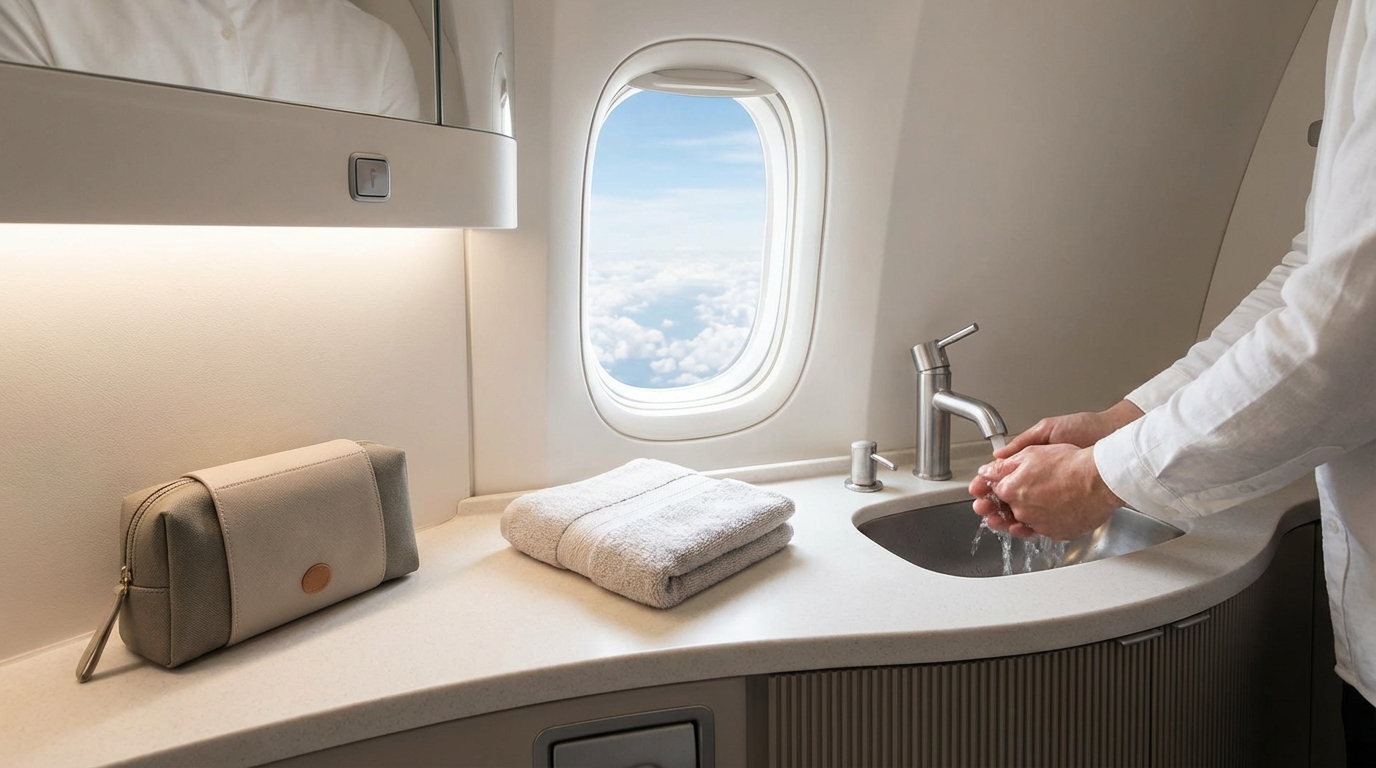
Some long-haul aircraft in premium cabins have larger lavatories with amenity kits, lotion, and even windows. But standard economy lavatories are minimal and functional.
Practical Tips
Wear Shoes
Never walk to the airplane bathroom in socks or bare feet. That liquid on the floor is not water. The bathroom floor gets wet from the sink, from turbulence sloshing, and from people with imperfect aim. Wear your shoes. Always.
Bring Your Own Supplies
Airplane soap runs out. Paper towels run out. Toilet paper gets low, especially on long flights. Carry a small pack of tissues and a travel-sized hand sanitizer in your pocket. You'll be glad you did.
Use the Coat Hook
Hang your jacket or bag on the coat hook behind the door. Don't set things on the floor or the edge of the sink. Space is tight, and stuff falls.
Lock the Door (Really)
This bears repeating. Slide the lock all the way to "LOCKED." If you don't, someone will try to open the door. It happens on every single flight. Save yourself the embarrassment.
Leave It Better Than You Found It
Wipe down the counter and sink area with a paper towel after you use it. Make sure the toilet is flushed. Pick up any paper towels that missed the trash. The next person will appreciate it, and so will the flight attendants who have to monitor these lavatories all day.
What About the Ashtrays?
You'll notice small ashtrays built into the lavatory door or wall. Smoking on planes has been banned for decades, but ashtrays are still required by the FAA. The reasoning: if someone breaks the law and smokes anyway, there needs to be a safe place to extinguish the cigarette rather than throwing it in the trash, which could start a fire.
Don't smoke in the lavatory. Smoke detectors are installed in every airplane bathroom and they're extremely sensitive. Getting caught smoking on a plane can result in fines up to $25,000 and potential criminal charges. It's federal law, not an airline policy.
A Note for Anxious Flyers
If using the airplane bathroom makes you nervous, you're not alone. The tight space, the loud flush, the unfamiliar mechanics, it's all a bit much the first time. But once you've done it once, it becomes completely routine. Millions of people use airplane bathrooms every single day without incident. You'll be fine.
Frequently Asked Questions
How does the airplane toilet flush?
Airplane toilets use a vacuum system, not water. When you press the flush button, a valve opens and powerful suction pulls waste through narrow pipes into a holding tank. It uses about half a gallon of liquid per flush. The loud whooshing sound is normal.
Can I use the airplane bathroom before takeoff?
Yes. Once you've boarded and before the final safety checks begin, you can use the lavatory. It's actually the best time since the bathrooms were just cleaned and nobody else has used them yet. Just be back in your seat with your seatbelt on before the plane pushes back.
Why won't the light turn on in the airplane bathroom?
The light is connected to the door lock. You must slide the lock to the LOCKED position for the light to turn on. If you close the door but don't lock it, the light may stay off and the Vacant sign remains visible outside.
How long should I spend in the airplane bathroom?
Keep it under five minutes. With only 3-4 lavatories for 150+ passengers, long visits create lines and frustration. Do what you need to do, wash your hands, and head back to your seat.
Can I use the first class bathroom if I'm in economy?
Technically, most airlines reserve front lavatories for premium cabin passengers. Flight attendants may redirect you to the rear lavatories. On some airlines the policy is relaxed, but the general rule is to use the bathrooms in your cabin section.
Written by Aviation Experts
Aviation Professionals
With decades of combined experience in the aviation industry, our team shares insider knowledge to make your travel experience smoother and less stressful.
Was this article helpful?