How to Claim Your Luggage at the Airport
Quick Answer
Claiming your luggage at the airport is straightforward if you know where to go. Here's how baggage claim works, how to handle lost or damaged bags, and what you're owed.
The Short Answer
After landing, follow the signs to baggage claim. Find the carousel assigned to your flight number on the display screens. Wait for your bag, verify it's yours, and leave. The whole process takes 15-45 minutes. If your bag doesn't show up, go to the airline's baggage service counter before you leave the airport.
Step-by-Step: How Baggage Claim Works
Step 1: Get to Baggage Claim
After you walk off the plane and through the jet bridge, follow the signs that say "Baggage Claim" or "Ground Transportation" (they're usually in the same direction). At most airports, baggage claim is located past the security checkpoint on the ground level, in an area that's accessible to everyone, including people who aren't flying.
If you have a connecting flight, don't go to baggage claim. Your bags will transfer automatically to your next flight. Just head to your connecting gate.
Step 2: Find Your Carousel
Baggage claim areas have multiple carousels (conveyor belts). Display screens near the carousels show which flight numbers are assigned to which carousel. Look for your flight number and go to that carousel.
If the screens are unclear, ask an airline agent or look for your airline's signage. Some airports group carousels by airline.
Step 3: Wait for Your Bags
Bags don't appear instantly. After landing, it typically takes 15-30 minutes for bags to start coming out on the carousel. Factors that affect timing:
- Aircraft size: Bigger planes carry more bags, which take longer to unload.
- Gate location: If your plane parked at a remote gate, it takes longer for the ground crew to bring bags to the terminal.
- Airport congestion: Busy periods mean more bags being handled simultaneously.
- Priority tags: First class and business class bags typically come out first. Bags tagged "Priority" or "Heavy" may appear early or late.
Use this time to hit the restroom or grab water. Just keep an eye on the carousel and don't wander too far.
Step 4: Grab Your Bag and Verify
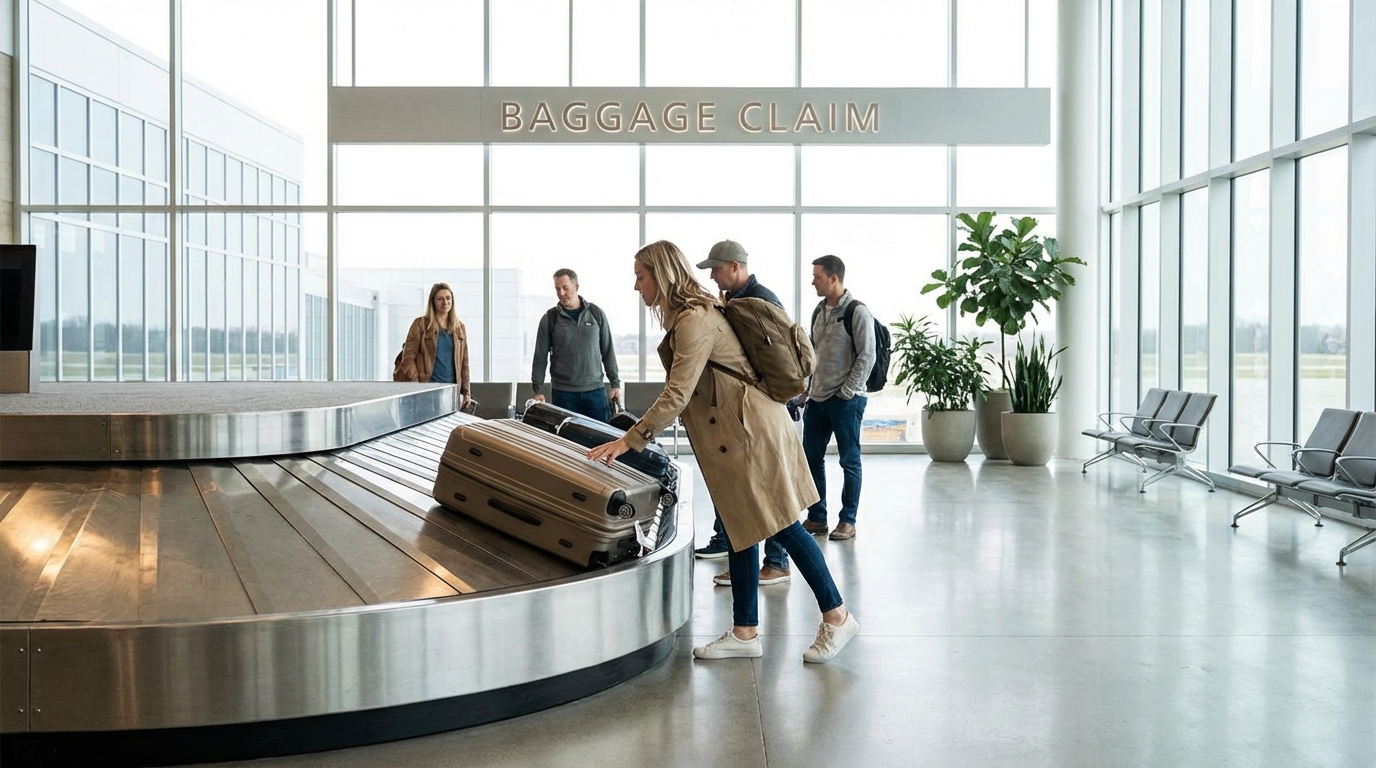
When you see your bag, grab it off the carousel. Before you walk away, check the bag tag attached to the handle. Verify that the name and flight information match yours. Black rolling suitcases all look the same, and bag mix-ups happen more often than you'd think.
That claim tag receipt the airline gave you at check-in? Keep it until you've confirmed you have the right bag. Some airports have agents at the exit who check claim tags against bags to prevent theft.
Step 5: Exit
Walk toward the exit. At some airports (especially international arrivals), there may be a brief stop where an agent glances at your bag tag. Then you're out. Ground transportation, rental cars, and pickup areas are usually right outside the baggage claim doors.
Tips for a Smoother Baggage Claim Experience
- Make your bag identifiable. Tie a brightly colored ribbon, use a distinctive luggage tag, or buy a bag that isn't plain black. This saves you from grabbing someone else's bag and from someone else grabbing yours.
- Use a luggage tracker. Drop an AirTag, Tile, or Samsung SmartTag in your checked bag. You can see exactly when your bag arrives at the carousel and track it if it goes missing.
- Remove old bag tags. Leftover tags from previous flights can confuse the baggage sorting system and potentially send your bag to the wrong carousel or the wrong city.
- Stand back from the carousel. Everyone crowds right up against the belt, making it harder for people to grab their bags. Stand a few feet back. You'll spot your bag just as quickly and have room to pull it off.
- Know your bag's weight. If it feels lighter or heavier than expected when you pick it up, double-check the tag. Wrong bag.
What If Your Bag Doesn't Show Up?
Don't panic. Most delayed bags show up within 24-48 hours. Here's what to do:
Step 1: Wait Until the Carousel Stops
Carousels run for a set period. Wait until the belt stops and the last bag has come out before concluding your bag is missing. Sometimes bags get stuck or come out last.
Step 2: Go to the Baggage Service Counter
Every airline has a baggage service office near the baggage claim area. Go there before you leave the airport. Filing a report on-site is much easier and faster than doing it over the phone later.
You'll need:
- Your bag claim tag (the sticker receipt from check-in)
- Your boarding pass or booking reference
- A description of your bag (color, brand, size, any distinguishing features)
- Your local address where the bag can be delivered
Step 3: Get a File Reference Number
The agent will create a report and give you a reference number. Save this. You'll use it to track your bag online and to file a compensation claim if needed.
Step 4: Ask About Essentials
Many airlines will give you a toiletry kit or a small reimbursement for essential purchases (clothes, toiletries) while you wait for your bag. Ask about this at the counter. The amount varies by airline, typically $50-$200 for the first day.
Delayed, Lost, or Damaged: Know Your Rights
Delayed Bags
Most "lost" bags are actually just delayed. Airlines are required to make reasonable efforts to return delayed bags to you. Most deliver them to your address within 24-48 hours. The airline should cover reasonable expenses for essentials you need while waiting. Keep your receipts.
Lost Bags
Airlines typically declare a bag officially lost after 5-14 days of being unable to locate it. Once declared lost, you're entitled to compensation:
- Domestic flights (U.S.): Airlines are liable for up to $4,700 per passenger.
- International flights: Under the Montreal Convention, liability is capped at approximately $1,700-$2,000.
You'll need to submit an itemized list of everything in the bag with estimated values. Airlines will apply depreciation, so you won't get full retail price for used items. Keep receipts for expensive items you pack.
Additionally, airlines must refund any checked bag fees for bags that are lost. This refund should happen automatically within 7-20 business days.
Damaged Bags
If your bag arrives damaged (ripped, broken wheels, smashed), report it at the baggage service counter before leaving the airport. Airlines are responsible for damage caused during transport.
Take photos of the damage immediately. The airline will either repair the bag, replace it, or compensate you. Normal wear and tear (scuffs, minor scratches) generally isn't covered. But broken handles, torn fabric, and crushed frames are.
Most airlines require you to report damage within 24 hours of receiving your bag for domestic flights and 7 days for international flights.
Special Situations
International Arrivals
When arriving on an international flight into the U.S., you'll collect your bags before going through customs. After clearing immigration (passport control), head to the carousel, grab your bags, and then proceed through the customs checkpoint with your bags and declaration form.
If you have a connecting domestic flight, you'll re-check your bags at a drop-off point after customs. Look for signs that say "Connecting Flights" or "Bag Re-Check."
Oversize and Special Items
Oversize items like strollers, car seats, golf clubs, skis, and surfboards often don't come out on the regular carousel. Look for a separate oversize baggage area, usually near the regular carousel but off to the side. Ask an airline agent if you're not sure where to find it.
Gate-checked items (strollers, small bags checked at the gate due to full overhead bins) are typically returned at the jet bridge as you exit the plane, not at baggage claim.
Multiple Airlines on One Itinerary
If your trip involves flights on different airlines (codeshare or partner carriers), your bags should still transfer automatically as long as everything was booked on one ticket. However, if there's a hiccup, the last airline that handled your bag is responsible for tracking and returning it.
How to Prevent Lost Luggage
- Fly nonstop when possible. Every connection is another chance for your bag to be misrouted.
- Check in early. Late check-ins mean your bags are last on the plane and most likely to be left behind if there's a time crunch.
- Use a luggage tracker. AirTags and similar devices let you see exactly where your bag is in real time. If your bag gets sent to the wrong city, you'll know before the airline does.
- Take a photo of your bag. If you need to describe it to an airline agent, a photo is worth a thousand words.
- Put contact info inside and outside the bag. If your external tag falls off, a card inside the bag with your name, phone number, and email gives the airline a way to reach you.
- Remove old tags and stickers. Bar code scanners can misread old tags and send your bag to a previous destination.
Frequently Asked Questions
How long does it take for bags to appear at baggage claim?
Bags typically start appearing on the carousel 15-30 minutes after landing. Factors like aircraft size, gate location, and airport congestion can affect timing. First class and priority-tagged bags usually come out first.
What should I do if my luggage is lost?
Go to the airline's baggage service counter before leaving the airport. File a report with your bag claim tag, boarding pass, and a description of your bag. Get a reference number to track it. Most delayed bags are delivered within 24-48 hours. If the bag is declared lost (usually after 5-14 days), you're entitled to compensation up to $4,700 on domestic flights.
How much compensation can I get for lost luggage?
For domestic U.S. flights, airlines are liable for up to $4,700 per passenger. For international flights, the Montreal Convention caps liability at approximately $1,700-$2,000. You'll need to provide an itemized list of the bag's contents with estimated values, and airlines will apply depreciation.
Do I need to pick up my bags during a layover?
For domestic U.S. connections on the same ticket, no. Your bags transfer automatically to your connecting flight. For international arrivals into the U.S., yes. You must collect your bags after immigration, carry them through customs, and re-check them for your connecting flight.
How do I report damaged luggage?
Report damage at the airline's baggage service counter before leaving the airport. Take photos of the damage immediately. Airlines are responsible for damage caused during transport and will typically repair, replace, or compensate you. Report within 24 hours for domestic flights and 7 days for international flights.
Written by Aviation Experts
Aviation Professionals
With decades of combined experience in the aviation industry, our team shares insider knowledge to make your travel experience smoother and less stressful.
Was this article helpful?