Economy vs Basic Economy: What You Lose
Quick Answer
Basic economy fares look cheaper, but the restrictions can cost you more than you save. Here's a breakdown of what each major airline takes away.
The Quick Answer
Basic economy strips away seat selection, flexibility, and sometimes your carry-on bag. The exact restrictions depend on which airline you're flying. Delta is the most restrictive, American is the most lenient, and United falls somewhere in between.
What Every Airline Takes Away in Basic Economy
These restrictions are universal across Delta, United, and American:
- No seat selection: You're assigned a seat at check-in (or sometimes at the gate). You can't pick your seat in advance, and if you're traveling with someone, there's a real chance you'll be separated.
- No changes or cancellations: Your ticket is locked in. No changes, no cancellations, no refunds. If your plans change, you lose the entire fare.
- Last boarding group: You'll board last, which means overhead bin space may be gone by the time you get on the plane.
- No upgrades: You can't be upgraded to a higher cabin, even if you have elite status (with some exceptions).
Airline-by-Airline Breakdown
Delta Basic Economy ("Main Basic")
Delta's basic economy is the most punishing of the big three. Here's what stings:
- No carry-on bag: This is the big one. Delta doesn't allow overhead bin access for basic economy passengers. You get one personal item that fits under the seat in front of you. That's it. Any larger bag must be checked for $35.
- No seat selection until 7 days before departure: You can pay to select a seat starting 7 days out, or get auto-assigned 24 hours before departure.
- Zero SkyMiles earned: Basic economy tickets earn no SkyMiles and no Medallion Qualification Dollars. You're flying and getting nothing for it loyalty-wise.
- No same-day changes: Unlike Main Cabin passengers, you can't make same-day flight changes even for a fee.
The carry-on restriction is what makes Delta's basic economy uniquely painful. If you'd normally fly with just a carry-on, you're suddenly paying $35 to check that bag, which often wipes out the savings of the cheaper fare.
United Basic Economy
United sits in the middle. Better than Delta, worse than American:
- Carry-on bags allowed on most routes: United allows a carry-on in the overhead bin on most domestic and international routes, which is a significant advantage over Delta.
- No mileage earning (with exceptions): Basic economy tickets no longer earn MileagePlus miles for most members. Only Premier elite members and eligible United credit card holders earn miles, and at reduced rates.
- Last boarding group enforced strictly: United consistently places basic economy passengers in the final boarding group, more so than American.
- No changes allowed: Non-refundable and non-changeable, just like the others.
American Airlines Basic Economy
American is the most generous with basic economy, relatively speaking:
- Carry-on bag allowed: You get one carry-on bag in the overhead bin plus one personal item. Same as regular economy.
- AAdvantage miles earned: You still earn mileage, though at a lower rate than Main Cabin.
- No seat selection: Still can't pick your seat in advance.
- No changes or cancellations: Standard basic economy inflexibility applies.
If you're going to buy basic economy, American gives you the least pain for your savings.
The Real Cost of Basic Economy
Let's do the math. Say a basic economy fare is $50 cheaper than regular economy on a round trip.
On Delta: If you need a carry-on, you're paying $35 each way to check it. That's $70 in bag fees, meaning you've spent $20 more than if you'd just bought the regular economy fare. Plus you earned zero miles.
On United: You save the $50 and keep your carry-on. But you earn no miles, can't pick your seat, and have zero flexibility. If anything changes, you lose the entire fare.
On American: You save $50, keep your carry-on, earn some miles, but give up seat selection and flexibility. This is the scenario where basic economy actually saves you money.
When Basic Economy Actually Makes Sense
Despite the restrictions, basic economy works in specific situations:
- Solo travelers on short flights: If you don't care where you sit, you're traveling alone, and it's a 2-hour flight, the savings are real.
- Light packers on American: You keep your carry-on and earn miles. If you don't need flexibility, take the savings.
- Work trips your company pays for: If you're not earning the miles anyway and the company wants the cheapest fare, basic economy does the job.
- When the price gap is huge: If basic economy is $150+ cheaper, the math starts working even on Delta.
When You Should Absolutely Avoid Basic Economy
- Traveling with family or a group: You will likely be separated. Airlines have gotten better about seating parents with young children together, but there's no guarantee, and traveling companions over 13 are fair game for random seat assignments.
- When your plans might change: No changes, no cancellations, no exceptions. If there's even a chance your schedule could shift, regular economy's flexibility is worth the extra cost.
- On Delta with a carry-on: The bag fee will eat your savings. Just buy regular economy.
- When you need a specific seat: Window for sleeping? Aisle for legroom? Exit row? None of that is available with basic economy.
- When you value miles and status: If you're working toward elite status, basic economy on Delta and United earns you nothing toward that goal.
How to Work Around Basic Economy Restrictions
A few tricks that can help:
- Check in at exactly 24 hours: Set an alarm. The earlier you check in, the better your auto-assigned seat will be.
- Use airline credit cards: Some airline co-branded cards restore certain benefits. United's card gives back a carry-on and seat selection on basic economy. Delta's SkyMiles cards restore overhead bin access.
- Pack light: If you can fit everything in a personal item (backpack or underseat bag), Delta's carry-on restriction doesn't matter.
- Check the fare difference: Sometimes the gap between basic and regular economy is only $10-$20. At that point, just buy regular economy.
What You Still Get with Basic Economy
It's not all bad news. Even basic economy includes:
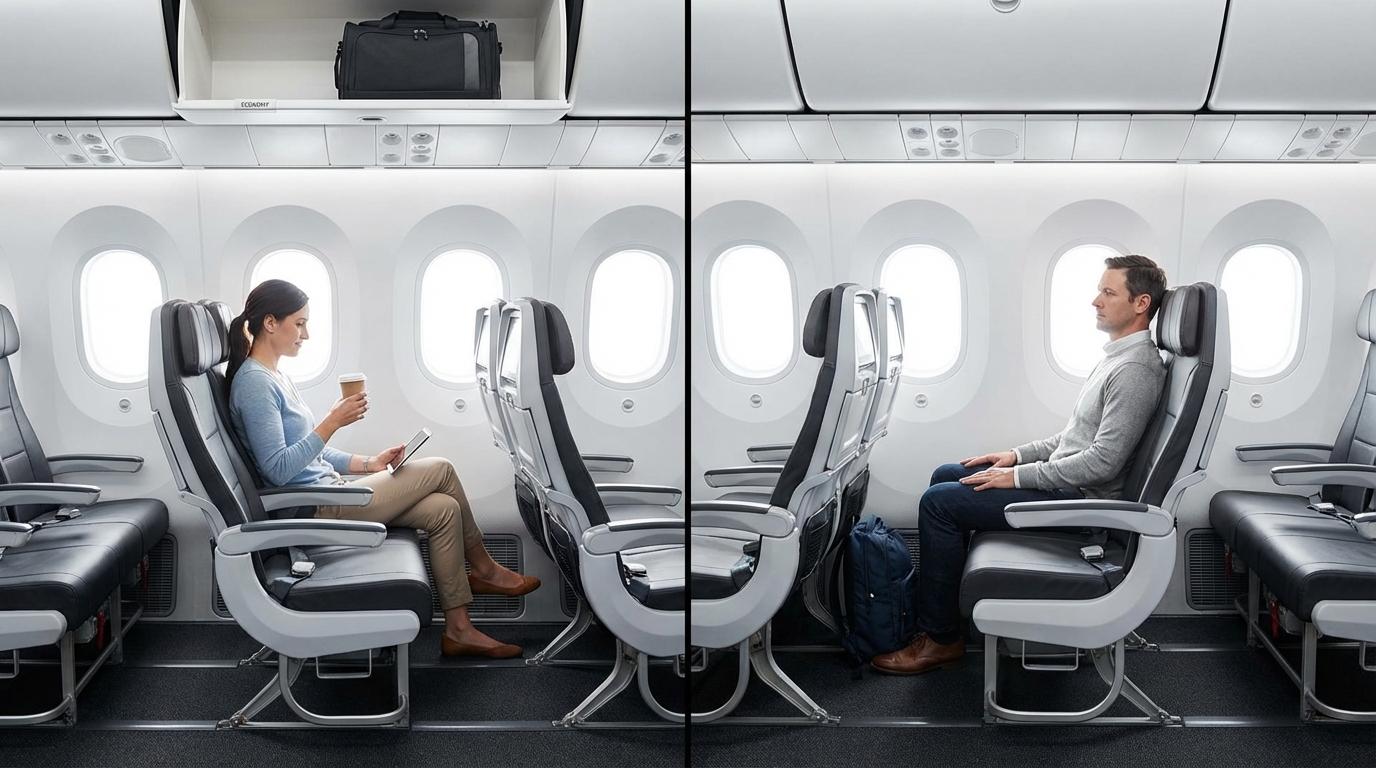
- Same seat size: You're in the same economy cabin with the same legroom and seat width as regular economy passengers
- Same in-flight service: Drinks, snacks, Wi-Fi, entertainment. All the same as Main Cabin
- One personal item: Every airline allows a backpack or small bag under the seat in front of you
- Same arrival time: You're on the same plane. You land at the same time. You just had a slightly less comfortable boarding experience.
Basic economy isn't a different cabin. It's the same seat with fewer perks around it. Once you're in the air, the experience is identical.
The Credit Card Workaround Explained
Several airline co-branded credit cards restore basic economy benefits, making the cheaper fare much more attractive:
- United: The United Explorer Card and higher-tier United cards give you a free checked bag, priority boarding, and expanded overhead bin access on basic economy. This effectively makes basic economy equal to regular economy minus seat selection.
- Delta: Any Delta SkyMiles credit card restores overhead bin access for basic economy, eliminating the most painful Delta restriction. You won't earn bonus miles, but at least you keep your carry-on.
- American: The Citi AAdvantage cards offer a free checked bag on basic economy tickets, though carry-on access is already included.
If you already carry one of these cards, basic economy becomes a much better deal because the worst restrictions are removed.
The Trend Is Getting Worse
Airlines keep adding more restrictions to basic economy while raising its price. Delta now offers "Basic Business" and "Basic First" fares, bringing the unbundling philosophy to premium cabins. The gap between what basic economy used to include and what it includes now has widened significantly.
The lesson? Always compare the total cost. Add up the fare plus any bag fees, seat selection fees, and the value of miles you won't earn. Sometimes basic economy saves you money. Often, it doesn't.
Frequently Asked Questions
Can I bring a carry-on bag with basic economy?
It depends on the airline. American Airlines allows a carry-on bag in basic economy. United allows it on most routes. Delta does not allow overhead bin access for basic economy passengers. On Delta, you're limited to one personal item under the seat, and any larger bag must be checked for $35.
Will I sit with my family if we buy basic economy tickets?
There's no guarantee. Basic economy assigns seats at check-in, and travel companions are frequently placed in different rows. Airlines have improved at seating parents with young children together, but companions over 13 are subject to random assignment. If sitting together matters, buy regular economy.
Do you earn miles on basic economy tickets?
It varies. American Airlines still awards AAdvantage miles on basic economy. Delta earns zero SkyMiles. United no longer awards MileagePlus miles for most basic economy passengers, though Premier elites and certain credit card holders earn at reduced rates.
Can I change or cancel a basic economy ticket?
No. Basic economy tickets on all major U.S. airlines are non-refundable and non-changeable. If your plans change, you lose the full fare amount. This is one of the biggest risks of buying basic economy.
Is basic economy worth it to save money?
Sometimes. It works best for solo travelers on short flights who pack light and have firm plans. But always calculate the total cost including bag fees and lost miles. On Delta especially, the carry-on restriction often wipes out any savings from the cheaper fare.
Written by Aviation Experts
Aviation Professionals
With decades of combined experience in the aviation industry, our team shares insider knowledge to make your travel experience smoother and less stressful.
Was this article helpful?